Brendan : Congrats Nik and Kurt! random.org liked you guys best. Thanks for playing and sorry if you didn’t win. But you know how these things go.
ian : “if she’d only come to me” from the amazing together after 5 LP. seven up bottles!
Dan : Favorite Doug tune? tough one. ‘Give Back the Key to My Heart’ usually wins out; I’m also partial to ‘Mendocin o’R...
Brendan : Damn! What a sweet playlist you all have cooked up here. It’s nice to see a big ole mess of Doug fans chiming in. Thanks for all these top...
Simon S : I once met Crosby at LAX,and he was EXTREMELY unfriendly untill i managed to mumble out something like “i just wanted to say that if i...
Len Liechti : In all honesty, Alejandro, this work is not artistically in the same class as If Only . . . which has to be the best album ever recorded by a...
Gabriel : If you were to do the podcasts in MPEG-4 format instead and use iTunes, then it is possible to show individual track names and cover art. This is...
Brendan : Sure, start by checking out the most recommended albums from the 1960s at acclaimedmusic. net.
routchane : I just discovered this masterpiece few month ago, and now I have to play it everyday. To me, it goes streat to my top albums like village green...
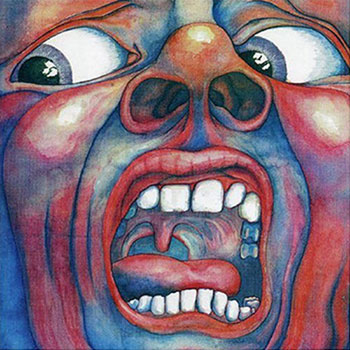
I bought In The Court Of The Crimson King straight after seeing Crimson support the Rolling Stones at the Hyde Park free concert in 1969. The then almost unknown Crimson delivered by far the strongest set of the day. I’ve listened to it periodically over the ensuing forty years, first on vinyl and latterly remixed on CD, and it still impresses me.
There are some fine musicians here. Bandleader and composer Robert Fripp can rock out on guitar with the best of the rest, but is happiest on avant-garde improvisations with a cool mellow tone. Drummer Mike Giles has all the jazzy chops. Bassist Greg Lake is also a clear-voiced, expressive singer. Probably the most talented member is Ian McDonald, who covers all keyboards and all wind instruments; a master of the Mellotron, his flute work is also particularly praiseworthy.
The album boasts but five tracks, all of which are basically straightforward songs on simple chord sequences with lyrics, courtesy of lyricist and poet Pete Sinfield, mostly incorporating the usual science-fantasy noodlings of the era, but with each song featuring a contrasting freeform instrumental section. “21st Century Schizoid Man” leads off with a nightmarish, distorted vision of a Michael Moorcock world, giving way to a fractured unison passage with impressive ensemble playing from all four musicians. “I Talk To The Wind” is a mellow, elegiac piece featuring gorgeous muted licks throughout from Fripp. “Epitaph”, my favourite track, invites comparisons with contemporaneous Moody Blues, being a powerful song drenched in Mellotron strings. “Moonchild” is another mellow epic with a long coda in which Fripp’s guitar holds an extended freeform conversation with McDonald’s Fender Rhodes, while Giles politely tries to horn in on the discussion. “The Court Of The Crimson King”, the band’s signature tune, closes proceedings in powerful style, ending with a charming nursery pipe organ recapitulation of the main theme.
There’s a lot of variation in dynamics here; the CD helpfully eliminates the annoyance caused by vinyl surface noise during the quieter passages. If I have any criticisms, they are minor: the use of a similar, slightly plodding 4/4 time signature throughout, and the long coda of “Moonchild” perhaps rather outstaying its welcome. However, this remains a classic of early prog, and one arguably not bettered by any later lineup of Crimson. For immediately after the ensuing lengthy US tour, McDonald and Giles both quit, and Lake abandoned ship during the recording of the follow-up In The Wake Of Poseidon, leaving Fripp to build again from scratch. He probably didn’t succeed at this level again till the brilliant Belew/Levin/Bruford guitar-based lineup of the eighties.
I bought In The Court Of The Crimson King straight after seeing Crimson support the Rolling Stones at the Hyde Park free concert in 1969. The then almost unknown Crimson delivered by far the strongest set of the day. I’ve listened to it periodically over the ensuing forty years, first on vinyl and latterly remixed on CD, and it still impresses me.
There are some fine musicians here. Bandleader and composer Robert Fripp can rock out on guitar with the best of the rest, but is happiest on avant-garde improvisations with a cool mellow tone. Drummer Mike Giles has all the jazzy chops. Bassist Greg Lake is also a clear-voiced, expressive singer. Probably the most talented member is Ian McDonald, who covers all keyboards and all wind instruments; a master of the Mellotron, his flute work is also particularly praiseworthy.
The album boasts but five tracks, all of which are basically straightforward songs on simple chord sequences with lyrics, courtesy of lyricist and poet Pete Sinfield, mostly incorporating the usual science-fantasy noodlings of the era, but with each song featuring a contrasting freeform instrumental section. “21st Century Schizoid Man” leads off with a nightmarish, distorted vision of a Michael Moorcock world, giving way to a fractured unison passage with impressive ensemble playing from all four musicians. “I Talk To The Wind” is a mellow, elegiac piece featuring gorgeous muted licks throughout from Fripp. “Epitaph,” my favourite track, invites comparisons with contemporaneous Moody Blues, being a powerful song drenched in Mellotron strings. “Moonchild” is another mellow epic with a long coda in which Fripp’s guitar holds an extended freeform conversation with McDonald’s Fender Rhodes, while Giles politely tries to horn in on the discussion. “The Court Of The Crimson King”, the band’s signature tune, closes proceedings in powerful style, ending with a charming nursery pipe organ recapitulation of the main theme.
There’s a lot of variation in dynamics here; the CD helpfully eliminates the annoyance caused by vinyl surface noise during the quieter passages. If I have any criticisms, they are minor: the use of a similar, slightly plodding 4/4 time signature throughout, and the long coda of “Moonchild” perhaps rather outstaying its welcome. However, this remains a classic of early prog, and one arguably not bettered by any later lineup of Crimson. For immediately after the ensuing lengthy US tour, McDonald and Giles both quit, and Lake abandoned ship during the recording of the follow-up In The Wake Of Poseidon, leaving Fripp to build again from scratch. He probably didn’t succeed at this level again till the brilliant Belew/Levin/Bruford guitar-based lineup of the eighties.
“Epitaph/March for No Reason/Tomorrow and Tomorrow”
Original Vinyl | 1969 | Atlantic | search ebay ] CD Reissue | 2004 | Discipline | amazon ]
Posted by Len |
Monday, August 31st, 2009 | Comments (6)
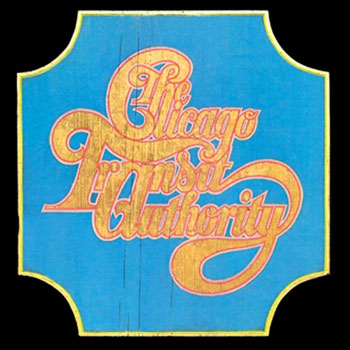
Opinion on what is surely one of the finest debut albums ever made tends to be somewhat polarised these days. Detractors of what eventually, sadly, unforgivably, metamorphosed into the ultimate slush-rock outfit simply ignore it; admirers of the earlier stuff who nonetheless try to distance themselves from the currently unfashionable genre of jazz-rock describe the band as a mainstream hard-rock quartet accompanied by a more-adventurous-than-average Memphis-style horn trio. In fact Chicago Transit Authority has real jazz in bucketloads, alongside blissed-out rock, blues, funk-soul and some wilful psychedelic oddness, particularly in the lyrics and occasional sound effects. And in this instance the mixture really does work.
The first thing that hits your consciousness is the bullhorn-brash confidence of this nascent outfit. Seven unknown but uncompromising musicians offer as their first recording a double album containing eleven lengthy tracks (and one short prologue). The staple fare is meticulously arranged songs, some of which contain enough modulations and changes of tempo to allow them to qualify as suites. Heaven knows how long they rehearsed to get their sh*t this tight, but they are that good and they know it. What other band had the chutzpah to include on its debut a seven-minute solo guitar piece comprising only electronic feedback, long before Lou Reed or Neil Young did so? No wonder the guitarist can be heard laughing into the amplifier mike half way through the piece. He’s not giving the finger to the record company; he’s saying, “this isn’t gratuitous noise, this is our art: make up your own mind whether it’s valid”.
All the musicians are excellent, but in particular guitarist Terry Kath can give Hendrix a fright in the sustain/widdling stakes (“Poem 58”: reportedly, Jimi rated him as a peer) and can perform a continually-inventive twelve-minute strut on the pentatonic comparable to Frank Zappa at his best (“Liberation”). Yes, the horns can throw in the choreographed stabs, but they show themselves capable of ambitious yet economical improv soloing (“Introduction”). Together, the septet move beyond finely honed jazzy pieces (“Beginnings”) through a bludgeoning riff-blues (“South California Purples”) to a latin-drenched drum solo (the fine cover of Steve Winwood’s “I’m A Man”), while the lyrics veer from hippy-dippy mysticism (“Does Anybody Really Know What Time It Is?”) to abrupt political statement (“Prologue, August 29, 1968” / “Someday”). The latter segues seamlessly and intelligently out of the former, a location recording of a chanting civil rights crowd, to drum the message home.
Chicago’s second release was also a jazzy double album, but the experimental weirdness was gone, leaving only a more sterile virtuosity. After that, it was downhill all the way to “If You Leave Me Now”. Chicago Transit Authority stands as their finest.
Opinion on what is surely one of the finest debut albums ever made tends to be somewhat polarised these days. Detractors of what eventually, sadly, unforgivably, metamorphosed into the ultimate slush-rock outfit simply ignore it; admirers of the earlier stuff who nonetheless try to distance themselves from the currently unfashionable genre of jazz-rock describe the band as a mainstream hard-rock quartet accompanied by a more-adventurous-than-average Memphis-style horn trio. In fact Chicago Transit Authority has real jazz in bucketloads, alongside blissed-out rock, blues, funk-soul and some wilful psychedelic oddness, particularly in the lyrics and occasional sound effects. And in this instance the mixture really does work.
The first thing that hits your consciousness is the bullhorn-brash confidence of this nascent outfit. Seven unknown but uncompromising musicians offer as their first recording a double album containing eleven lengthy tracks (and one short prologue). The staple fare is meticulously arranged songs, some of which contain enough modulations and changes of tempo to allow them to qualify as suites. Heaven knows how long they rehearsed to get their sh*t this tight, but they are that good and they know it. What other band had the chutzpah to include on its debut a seven-minute solo guitar piece comprising only electronic feedback, long before Lou Reed or Neil Young did so? No wonder the guitarist can be heard laughing into the amplifier mic half way through the piece. He’s not giving the finger to the record company; he’s saying, “this isn’t gratuitous noise, this is our art: make up your own mind whether it’s valid.”
All the musicians are excellent, but in particular guitarist Terry Kath can give Hendrix a fright in the sustain/widdling stakes (“Poem 58”: reportedly, Jimi rated him as a peer) and can perform a continually-inventive twelve-minute strut on the pentatonic comparable to Frank Zappa at his best (“Liberation”). Yes, the horns can throw in the choreographed stabs, but they show themselves capable of ambitious yet economical improv soloing (“Introduction”). Together, the septet move beyond finely honed jazzy pieces (“Beginnings”) through a bludgeoning riff-blues (“South California Purples”) to a latin-drenched drum solo (the fine cover of Steve Winwood’s “I’m A Man”), while the lyrics veer from hippy-dippy mysticism (“Does Anybody Really Know What Time It Is?”) to abrupt political statement (“Prologue, August 29, 1968” / “Someday”). The latter segues seamlessly and intelligently out of the former, a location recording of a chanting civil rights crowd, to drum the message home.
Chicago’s second release was also a jazzy double album, but the experimental weirdness was gone, leaving only a more sterile virtuosity. After that, it was downhill all the way to “If You Leave Me Now.” Chicago Transit Authority stands as their finest.
“Prologue, August 29, 1968″
CD Reissue | 2002 | Rhino | amazon ] Original Vinyl | 1969 | Columbia | search ebay ] MP3 Album | download ]
Posted by Len |
Wednesday, August 26th, 2009 | Comments (4)
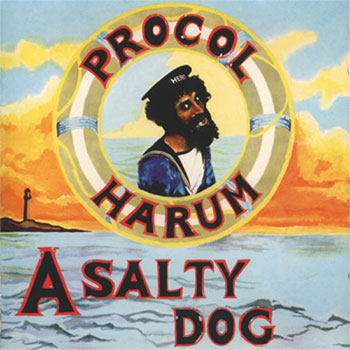
Agruably Procol Harum’s finest hour, A Salty Dog (A&M, 1969) was the last album with keyboard/organ player Matthew Fisher. Fisher’s keyboards dominate typical Procol Harum numbers like “Pilgrim’s Progress,” “All This and More,” and the excellent progressive rocker “Wreck of the Hesperus.” These songs (all very good) are what you’d expect to find on a late 60’s Procol Harum record, a slow paced, keyboard driven sound. It’s the remaining tracks that push the group’s resources to the limit, seeing them branch out into new musical territory that is often exciting and original.
The album opened with the title track, “A Salty Dog.” One of Procol Harum’s most ambitious statements, this composition features beautiful string arrangements and Gary Brooker’s tremendous vocals (he never sounded better). Also of note are B.J. Wilson’s powerhouse drum work and the brilliant lyrics of Keith Reid, which accurately describe the paranoia ocean explorers encounter at sea. For these reasons, the music and lyricism work well together, creating a peculiar sense of impending doom or fear of the unknown. ”A Salty Dog” is still regarded as one of the finest pieces of early progressive rock, and with good reason, it’s a superb song that conjures up eerie feelings - a must own. Other standouts are the dreamy folk of “Too Much Between Us,” intelligent roots rock in ”The Hand of Human Kindness” and the pre World War II style blues of ”Juicy John Pink.” The latter sounds lo-fi and may be the rawest, most basic track Procol Harum has ever cut; it really is an authentic blues piece too, highlighted by Trower’s fantastic guitar leads and Brooker’s boozy late nite vocals. “Boredom,” another unique number, is a pretty accoustic campfire jam with distinct Caribbean rhythms. This is an LP full of variety and style.
Hard rock enthusiasts may want to pick this up for the great, sludgey rocker titled ”The Devil Came From Kansas.” This one has pounding drums and pile driving guitar riffs, probably their heaviest song - essential music for the classic rock fan. In fact, all throughout the album Robin Trower’s guitar work is a joy, reaching highs with his own epic composition “Crucifixion Lane” and the cool, stuttering fuzztones heard on aforementioned ”The Hand of Human Kindness.” The band tries all kinds of different experiments out on A Salty Dog, so in a sense it may sound overwhelming at first. Patience and mutiple listens pay off and reveal A Salty Dog to be one of the best classic rock albums of 1969.
Originals are easy to find in good shape (vinyl). There have been several good cd reissues by Salvo (2009) and Westside as well. These reissues feature excellent bonus material and copious liner notes. By the way, A Salty Dog is slang for an experienced sailor or a libidinous man. It’s also the name of an acoholic beverage which is made with vodka or gin and grapefruit juice.
“Milk Of Human Kindness”
Original Vinyl | 1969 | A&M | search ebay ] CD Reissue | 2009 | Salvo | amazon ]
Posted by Jason |
Tuesday, August 25th, 2009 | Comments (2)
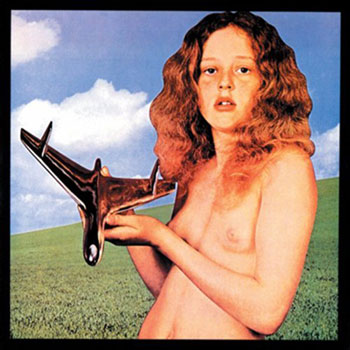
The story of Blind Faith – was ever such a star-crossed project more appropriately named? – is so thoroughly documented that there’s no need to elaborate upon it here. (For those around but inexplicably absent from Planet Rock during 1969, and for those then unborn, the excellent booklet in this CD provides a concise and honest history.) Objective examinations of the band’s music, however, are thinner on the ground.
In June 1969, fired by the blaring press announcements of Blind Faith’s formation, I hitch-hiked to London’s Hyde Park to see the free concert that would prove to be their only UK appearance. Far smaller than the hype, of course, the performance drew mixed reviews, but I recall being well enough impressed by the quality songs with Steve Winwood’s solid, soulful fronting on vocal and Fender Rhodes and Eric Clapton’s uncharacteristically diffident but technically faultless guitar playing. On encountering the film of the show on TV almost exactly forty years later, I found no reason to change my mind.
When the LP was announced I was early in the queue. When it proved to be the first album to be released in the UK in stereo only, I had to purchase a stereo-compatible tone arm and cartridge and fit them to my old mono record player simply to accommodate the new purchase. I was impressed with the record then, and remain so today. I’m well aware that this is not a universal view, and will read comments to this post with interest.
Of the original six tracks, Winwood’s “Had To Cry Today” and Clapton’s “Presence Of The Lord” are rock music of the highest quality, and IMHO feature Steve’s voice and Eric’s guitar at their absolute zenith. A younger Clapton once said that his ambition was to make an audience cry with just one note; the final bend of his solo on “Presence” damn nearly makes it happen. “Can’t Find My Way Home” is a charming unplugged ensemble rendition spoilt only by rather obtrusive cymbal splashes from Ginger Baker – the only blemish on an otherwise excellent Jimmy Miller production – whilst Baker’s own “Do What You Like” stands comparison with Steely Dan’s “Do It Again” in its rambling linear structure and funky feel. The weakest offering, “Sea Of Joy”, is rescued by a superbly melodic violin solo from Rick Grech. The compositional strength of the tracks is undeniable; “Had To Cry Today” was strong enough to justify covering by Joe Bonamassa as the title track of his album, whilst Faith’s tasteful reinvention of Buddy Holly’s “Well All Right” was covered almost verbatim by Carlos Santana.
The original 35-minute vinyl album may have represented just about all the quality material Faith had to offer, but there was no filler. By contrast the latest reissue CD, the “deluxe” 2-CD version, includes as bonus tracks several alternative (and inferior) versions of the original songs, a couple of other songs not deemed (quite rightly) strong enough to release first time round, and a second discful of rehearsal jams of historic interest only. New converts should concentrate on the first six tracks here, and also if possible seek out the DVD of the Hyde Park concert, which is by no means faultless as cinema but is an above-average record of a historic sixties concert.
The story of Blind Faith – was ever such a star-crossed project more appropriately named? – is so thoroughly documented that there’s no need to elaborate upon it here. (For those around but inexplicably absent from Planet Rock during 1969, and for those then unborn, the excellent booklet in this CD provides a concise and honest history.) Objective examinations of the band’s music, however, are thinner on the ground.
In June 1969, fired by the blaring press announcements of Blind Faith’s formation, I hitch-hiked to London’s Hyde Park to see the free concert that would prove to be their only UK appearance. Far smaller than the hype, of course, the performance drew mixed reviews, but I recall being well enough impressed by the quality songs with Steve Winwood’s solid, soulful fronting on vocal and Fender Rhodes and Eric Clapton’s uncharacteristically diffident but technically faultless guitar playing. On encountering the film of the show on TV almost exactly forty years later, I found no reason to change my mind.
When the LP was announced I was early in the queue. When it proved to be the first album to be released in the UK in stereo only, I had to purchase a stereo-compatible tone arm and cartridge and fit them to my old mono record player simply to accommodate the new purchase. I was impressed with the record then, and remain so today. I’m well aware that this is not a universal view, and will read comments to this post with interest.
Of the original six tracks, Winwood’s “Had To Cry Today” and Clapton’s “Presence Of The Lord” are rock music of the highest quality, and feature Steve’s voice and Eric’s guitar at their absolute zenith. A younger Clapton once said that his ambition was to make an audience cry with just one note; the final bend of his solo on “Presence” damn nearly makes it happen. “Can’t Find My Way Home” is a charming unplugged ensemble rendition spoilt only by rather obtrusive cymbal splashes from Ginger Baker – the only blemish on an otherwise excellent Jimmy Miller production – whilst Baker’s own “Do What You Like” stands comparison with Steely Dan’s “Do It Again” in its rambling linear structure and funky feel. The weakest offering, “Sea Of Joy,” is rescued by a superbly melodic violin solo from Rick Grech. The compositional strength of the tracks is undeniable; “Had To Cry Today” was strong enough to justify covering by Joe Bonamassa as the title track of his album, whilst Faith’s tasteful reinvention of Buddy Holly’s “Well All Right” was covered almost verbatim by Carlos Santana.
The original 35-minute vinyl album may have represented just about all the quality material Faith had to offer, but there was no filler. By contrast the latest reissue CD, the “deluxe” 2-CD version, includes as bonus tracks several alternative (and inferior) versions of the original songs, a couple of other songs not deemed (quite rightly) strong enough to release first time round, and a second discful of rehearsal jams of historic interest only. New converts should concentrate on the first six tracks here, and also if possible seek out the DVD of the Hyde Park concert, which is by no means faultless as cinema but is an above-average record of a historic sixties concert.
“Presence of the Lord”
CD Reissue | 2001 | Polydor | amazon ] Original Vinyl | 1969 | Atco | ebay ]
Posted by Len |
Wednesday, August 19th, 2009 | Comments (1)
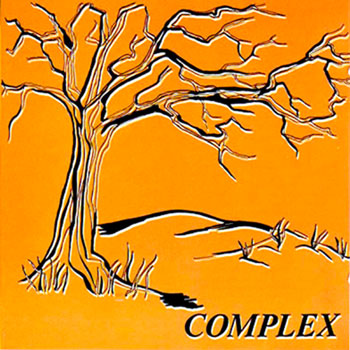
Complex is a super-rare and long-out-of-print holy grail private press classic. Revered by the almighty Acid Archives (they’ve got trophy photos of it staged next to bottles of fine Scotch!), as “one of the ‘Holy Trinity’ items of rare British psychedelia (the other two being Dark and Forever Amber),” Complex somehow sounds distinctly like mid-60s American garage rock – so much so that I find its 1970 record date quite hard to believe.
They tear open the album with a fire-breathing combo organ lead; Funny Feeling is a 3-part tune revealing two factors of the Complex sound – intelligent and endearing compositions filtered through fuzzy, raw energy. Green Eyed Lucy’s vibrating bass guitar groove helps strike the balance between blues, soul, and unbridled teenage garage. Gratuitous guitar shredding on Witch’s Spell and “sensitive” boppers like Norwegian Butterfly, seemingly written to get the lead singer, whose confident voice is a sweet surprise, some groupie action. Self Declaration features an epic Iron Butterfly-esque prog-organ solo and throughout the album a distinct and drastically lo-fi sound is present from start to finish.
Then there’s my favorite track – the unexpected, wildly out-of-place but somehow perfect Josie. It’s a surprise that this group of white suburban kids could pull off a convincing reggae dancehall number, but a joy to hear the squeaky combo organ bouncing along with the ragtag orchestra backing this weird little number.
Complex is a scary kind of record, the rarity and grungy sound are sure to dissuade casual listeners, but seekers will find the sounds much more accessible than the ghastly psychedelic cover implies. It’s really just an oldies garage record with soul; you can play it for friends without clearing the room! Begging for a reissue.
Hank “Sugarfoot” Garland always wanted nothing more than to be a jazz guitarist, like his idol Tal Farlow. Instead he became a respected session axeman for the burgeoning late 1950s Nashville country-pop music factory under Chet Atkins’s velvet fist. You’ve all heard Hank; his guitar is all over those hits that Elvis Presley, the Everly Brothers, Brenda Lee and Patsy Cline waxed from 1958 to 1961. And guitar buffs will know that Hank was one half of the design team of the premium thin-bodied Gibson archtop, the Byrdland, with fellow sessioneer Billy Byrd.
Much earlier, however, a teenage Garland had been recruited by Decca staff producer Paul Cohen in 1949 as a potential hitmaking guitar-playing country singer. He did have an unsophisticated but engaging voice, when he wasn’t trying to be Floyd Tillman. However, it’s mainly for his astonishing chops as an electric flatpicker that we remember him today. Having heard Garland’s self-penned “Sugarfoot Boogie”, from which he took his “Sugarfoot” moniker, Cohen recorded Hank on a short series of stunning instrumental singles between 1949 and 1951, all of which stiffed chartwise. In an attempt to improve his chances, he was encouraged to resume vocalising, but without success. He was dropped by Decca at the end of 1951 and moved into touring band work, and thence into sessions.
Garland never released an album as a soloist during his Decca period; this reissue collection of 20 individual tracks is courtesy of Bear Family Records of Germany. Nor did he actually lead a band called the Sugar Footers, though the personnel on almost all his sessions included regular members Owen Bradley on piano or Hammond, Ernie Newton on bass and Jack Shook on rhythm guitar. Their products, both instrumental and vocal, are scintillating. On the 1951 track “E-String Rag”, Hank’s relaxed vocal fronts a fine Western Swing number, his sparkling guitar breaks backed up by brief interjections from the other sessioneers. “Guitar Shuffle”, a 1950 cover of Arthur Smith’s “Guitar Boogie” with added vocal, mostly constrains Garland’s playing to the darker recesses of “farmer’s corner” but boasts a killer beat (forget Jackie Brenston: rock’n’roll starts here, folks) and a gorgeous break from C6 lapsteelist Bob Foster. And on the strangely unissued single Garland recorded for Chic on a brief session in 1957, “Baby Guitar”, he lets fly with the full, awesome flatpicking technique. When you hear Albert Lee or John Jorgensen in full flight, bear in mind that Hank Garland did this on a big-bodied semi-acoustic through a small, reverb-less tube amp, and without the benefit of vari-speed overdubbing like Les Paul.
It would be nice to think that Hank Garland’s ambition came true. Like many other Nashville regulars, he would gather after-hours to play jazz sessions in the city’s bars. In 1960 Hank finally recorded an acclaimed LP on Columbia, “Jazz Winds From A New Direction”, with a trio including Gary Burton on vibes. But less than a year later he was involved in a horrendous road accident, and after several months in a coma he recovered to find that he had lost his coordination and much of his memory. Hank Garland never played another session.
Hank “Sugarfoot” Garland always wanted nothing more than to be a jazz guitarist, like his idol Tal Farlow. Instead he became a respected session axeman for the burgeoning late 1950s Nashville country-pop music factory under Chet Atkins’s velvet fist. You’ve all heard Hank; his guitar is all over those hits that Elvis Presley, the Everly Brothers, Brenda Lee, and Patsy Cline waxed from 1958 to 1961. And guitar buffs will know that Hank was one half of the design team of the premium thin-bodied Gibson archtop, the Byrdland, with fellow sessioneer Billy Byrd.
Much earlier, however, a teenage Garland had been recruited by Decca staff producer Paul Cohen in 1949 as a potential hitmaking guitar-playing country singer. He did have an unsophisticated but engaging voice, when he wasn’t trying to be Floyd Tillman. However, it’s mainly for his astonishing chops as an electric flatpicker that we remember him today. Having heard Garland’s self-penned “Sugarfoot Boogie,” from which he took his “Sugarfoot” moniker, Cohen recorded Hank on a short series of stunning instrumental singles between 1949 and 1951, all of which stiffed chartwise. In an attempt to improve his chances, he was encouraged to resume vocalising, but without success. He was dropped by Decca at the end of 1951 and moved into touring band work, and thence into sessions.
Garland never released an album as a soloist during his Decca period; this reissue collection of 20 individual tracks is courtesy of Bear Family Records of Germany. Nor did he actually lead a band called the Sugar Footers, though the personnel on almost all his sessions included regular members Owen Bradley on piano or Hammond, Ernie Newton on bass, and Jack Shook on rhythm guitar. Their products, both instrumental and vocal, are scintillating. On the 1951 track “E-String Rag,” Hank’s relaxed vocal fronts a fine Western Swing number, his sparkling guitar breaks backed up by brief interjections from the other sessioneers. “Guitar Shuffle”, a 1950 cover of Arthur Smith’s “Guitar Boogie” with added vocal, mostly constrains Garland’s playing to the darker recesses of “farmer’s corner” but boasts a killer beat (forget Jackie Brenston: rock’n’roll starts here, folks) and a gorgeous break from C6 lapsteelist Bob Foster. And on the strangely unissued single Garland recorded for Chic on a brief session in 1957, “Baby Guitar”, he lets fly with a full, awesome flatpicking technique. When you hear Albert Lee or John Jorgensen in full flight, bear in mind that Hank Garland did this on a big-bodied semi-acoustic through a small, reverb-less tube amp, and without the benefit of vari-speed overdubbing like Les Paul.
It would be nice to think that Hank Garland’s ambition came true. Like many other Nashville regulars, he would gather after-hours to play jazz sessions in the city’s bars. In 1960 Hank finally recorded an acclaimed LP on Columbia, “Jazz Winds From A New Direction”, with a trio including Gary Burton on vibes. But less than a year later he was involved in a horrendous road accident, and after several months in a coma he recovered to find that he had lost his coordination and much of his memory. Hank Garland never played another session.
High Geared Daddy- Gonna Shake This Shack Tonight (Bear Family, 2008) is a good single disc look at Webb Pierce’s 1950s work. If you can spring for it, Bear Family’s 4 disc 1951 – 1958 collection is preffered but at 32 tracks, High Geared Daddy covers many of his classics from this era.
Webb Pierce was hated by the Nashville establishment of the day but there’s no getting around the fact that he redefined the honky tonk sound. Not only did he place 95 songs in the charts (13 top slots) but also created his own record label in 1950 (Pacemaker), set up a successful publishing company (Cedarwood Publishing) and bought several radio stations. The image was there too; there are numerous photos of Webb in fancy cars wearing one of his patent Nudie suits. He made a small fortune and essentially built a country music empire. All this tends to overshadow the fine body of music Webb Pierce produced in the 1950s.
Bear Family’s High Geared Daddy comes highly recommended as an introduction to this underrated country artist (the exceptional liner notes make a great cd package even better). The disc covers key tracks from the Pacemaker, Decca, and Fourstars record labels, a period which spans from 1949 to 1959 (his peak years). Webb Pierce bought most of the songs he was supposed to have written but his skills as a singer and interpreter are unmatched. There are great renditions of Roy Acuff’s “Freight Train Blues” and Jimmie Rodgers “In The Jailhouse Now,” two songs which are given Webb’s own personal stamp. The same goes for George Jones’ classic ”Why Baby Why,” a superb 1956 duet with Red Sovine. More suprising is a raw cover of the Everly Brothers’ classic “Bye Bye Love” and the pure rockabilly of “Teenage Boogie” and “The New Raunchy.” These classics swing hard and stomp loudly; few honky tonkers could reach Webb’s level of consistency. Sure, there are some classic tracks that are missing but what’s here is vibrant and strong.
It’s a shame people remember Webb Pierce for his outspoken nature and questionable business tactics. High Geared Daddy proves that Pierce was one of America’s great post war artists, a man who revolutionized/modernized the honky tonk sound.
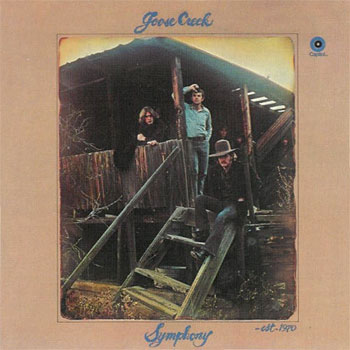
In the intersection of country and rock, sometimes a band comes along who clearly bit the country bug enough to get the right chops, but for some reason not enough to take it entirely serious. To my ears, Goose Creek Symphony’s debut, Established 1970, has a an overly slack-jawed approach – perhaps a cool nod that this hillbilly thing is just for kicks. But much like Ween’s brilliant Nashville foray, 12 Golden Country Greats, the music is too damn good to write off.
Charlie’s Tune exemplifies my issue: they sing a little like phony bumpkins with a jaw harp, though the guitar is choogling and it grooves just right, you’re still embarrassed to play it in public. Luckily their cover of Satisfied Mind reads perfect and may be the one of the best I’ve heard. Talk About Goose Creek takes the irony even further, however, the jaw harp louder, ‘home on the range’ lyrics cheezier, but the groove is even more infectious with some bad ass drum work taking things for a psyched out ride.
Mostly, only a few tracks are this polarizing. Beautiful Bertha and Confusion are solid stoned rockers, Raid on Brush Creek and Big Time Saturday Night both nail The Band’s americana strike zone, and closing ballad Symphony Music rounds out the record with breezy rural rock.
I have been totally split on Est. 1970 but finally given in, and hard. There is no way to disqualify Goose Creek’s authenticity, their Arizona/Kentucky roots are for real and they’ve stayed true to their boldly unique style for many years now. I guess I have had the same problem with the Dillards in that the singing can, sometimes, just sound too faux-billy (or maybe it’s records that open with I’ll Fly Away). All I’ll say now is I love the record regardless, and you be the judge.
“Talk About Goose Creek And Other Important Places”
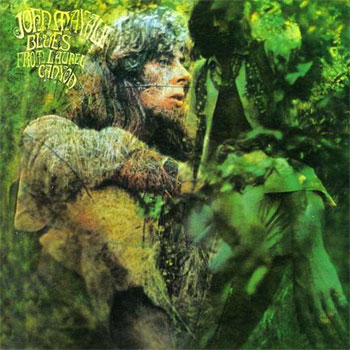
John Mayall is of course the Godfather Of British Blues, first recording in 1965 and still touring and recording prolifically today, well into his seventies. My favourite of his many albums is this offering from 1968, which is both a collection of original blues-based songs with contemporary psych overtones and also a diary in music of his three-week vacation in Los Angeles that summer: either a song cycle or a concept album, according to your own definitions, but certainly unique among the slew of straightforward blues albums being produced by white performers on both sides of the Atlantic at the time.
Starting with the roar of a jet swinging across the stereo plane – a device cheekily lifted from the Beatles’ White Album – the record chronicles Mayall’s discovery of the heady delights of late sixties LA, his first sojourn in Laurel Canyon where he would later make his permanent home, his stay as a guest of Canned Heat with whom Mayall struck up a strong and lasting rapport – later, both Harvey Mandel and Larry Taylor would leave Heat to join Mayall’s band – and, in considerable detail, his mission to get laid. It ends with a rueful recollection of the brief love affair and a moody anticipation of returning home to the UK.
In fact this is a collection of many moods, from joyous exploration of glamourous new surroundings, to irritable self-examination following a bust-up with an unidentified companion, to deep and intimate relations in the bedroom. The changes of mood are emphasised by Mayall’s constant switches of instrumentation – he was already virtuosic on piano, Hammond, and mouth-harp and capable on guitar – and by the careful segue of each track into the next, plus the pitching of each song in a different key. Every one of the twelve keys of the chromatic scale, except F#, is used (try playing blues in Db or Ab, if you will).
Backup is provided by the rock-solid rhythm section of drummer Colin Allen and 18-year-old bassist Stephen Thompson, while guitarist Mick Taylor, on his final studio outing with Mayall prior to joining the Stones, wields his Les Paul always tastefully and often excitingly throughout. Production by Decca’s veteran producer Mike Vernon is commendable for those eight-track days.
My standout tracks are Ready To Ride, on which Mayall’s overactive hormones fuel some explosive harp work, The Bear, whose intro pays tribute to a well-known Heat riff before segueing into a delightful piano-led country blues dedicated to Bob Hite, and Miss James, in which the Hammond reels through jazzy changes in their best Jimmy Smith style. But individual tracks cannot do justice to this album; for best effect it demands to be heard in sequence at a single sitting.
“Ready to Ride”
CD Reissue | 2007 | United UK | amazon ] Original Vinyl | 1968 | Decca | search ebay ] MP3 Album | download ]
Posted by Len |
Thursday, August 6th, 2009 | Comments (7)
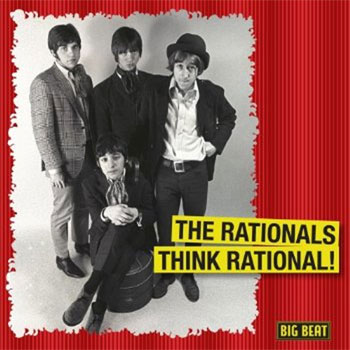
The Rationals are the most important early Detroit/Ann Arbor group. Although they only had a few huge regional hits, they were highly influential on the Detroit/Ann Arbor club scene and their music has aged gracefully. Maybe not the first rock n roll group to hail from the Mid West region but certainly one of the best, The Rationals had a unique garage/teenbeat sound early on; eventually they would take a drastic left turn into hard soul and heavy Detriot rock n roll during the late 60s.
In the summer of 2009 Big Beat reissued all the group’s early singles and outtakes on double disc anthology Think Rational. This first time legit reissue of the group’s early years is not without its flaws. For one, Big Beat did not include the group’s Not Like It Is single, instead we get an underdub of the Cameo 45 that’s about 30 seconds longer and without the handclaps. Also, some of the Fan Club LP (only two were pressed back in 66/67!) is missing. Two instrumentals, Wayfaring Stranger (a very cool folk-rock surf instro) and Jam, plus alternate takes of some early singles are not included (Gave My Love, Little Girls Cry, and Look What You’re Doing). While these 3 tracks are part of the original Fan Club LP the alternate versions aren’t all that different from the officially released singles (sound quality differs slightly on the alternate takes). I’ve been told that the Fan Club LP will be released on vinyl sometime in the near future though I’m not sure which label will be doing the honors. With that said, Think Rational is a great package, evenly divided between the group’s garage and soul eras. Without doubt this is one of the best reissues of 2009.
“Wayfaring Stranger”
2CD Reissue | 2009 | 101 Distribution | purchase ] Original Vinyl | The Rationals | search ebay ]
Posted by Jason |
Tuesday, August 4th, 2009 | Comments (1)