Classic Gear: Pedal Steel Guitar
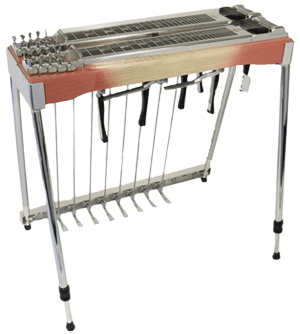 The pedal steel guitar’s journey to Nashville began in the Hawaiian Islands. Islanders would take an old guitar, lose the frets, raise the strings, and then slide the dull edge of a steel knife to sound wavering chords up and down the strings. Further tinkering from the Dopyer Brothers led to the invention of the Dobro, the classic bluegrass instrument. The Dobro eventually morphed into the lap steel, which when electrified was one of the first electric guitars, and along with ukulele became one of the signature sounds of Hawaii. After Gibson added pedals to their lap steel, calling it the Electraharp, pedal modifications developed until the standardized pedal steel was born.
Unlike the lap steel, the pedal steel guitar is not limited in its voicings – it allows for an unlimited amount of inversions and chords. By depressing pedals and knee levers while playing, the pedal steel performer can raise or lower each string up to two steps. Combined with the crying slide of the steel bar used to fret the strings, this affords the pedal steel guitar its expressive and distinct whine that Lloyd Green would call “the other voice in country music.”
However, pedal steel’s use is not limited exclusively to country music. The pedal steel has been used in rock music by David Gilmour, Manassas, and Steely Dan. King Sunny Adé even incorporated the instrument into Jùjú music, bringing the story of the steel all the way to Nigeria.
Examples
Webb Pierce’s “Slowly” was the first record to feature pedal steel guitar. Bud Isaacs had attached a pedal to his console steel guitar that yanked the pitch of two strings, affording quick access to two common tunings. During the very first chords you can hear Isaacs bend a string up and back down (and then back up!), a resounding ‘hello’ from country music’s new signature instrument.
Webb Pierce “Slowly”
Long time steel guitarist for Buck Owen’s Buckaroos, Tom Brumley was another celebrated player, who would go on to record with Rick Nelson, Chris Hillman’s Desert Rose Band, and plenty others. This tune, adapted from either an old Hawaiian lap steel rag, or the 1920’s “Guitar Rag” helped popularize the pedal steel in C&W circles, and is still performed today by most every steel guitar player.
Buckaroos “Steel Guitar Rag”
Buddy Emmons, “the Big E,” wasn’t only one of the world’s greatest steel players, he also damn near invented the thing (when you order a pedal steel, you have to specify if you want an Emmons or [Jimmy] Day setup). A lap steel player early as age 11, Buddy went on to play with the likes of Ernest Tubb, Ray Price, and The Everly Brothers and formed the successful pedal steel manufacturing company, Sho-Bud. On his 1963 Pedal Steel Jazz record, Emmons set out to demonstrate the versatility of the instrument.
Buddy Emmons “Gravy Waltz”
Even if you can’t stand Frank Zappa, this next track is worth a listen for what may be the hottest steel solo I’ve ever heard. After some characteristically bizarre orchestrated mayhem, Sneaky Pete Kleinow, legend of the steel (too many appearances to name), stretches way out over one of FZ’s most addicting grooves.
Frank Zappa “It Just Might Be A One Shot Deal”
 )
)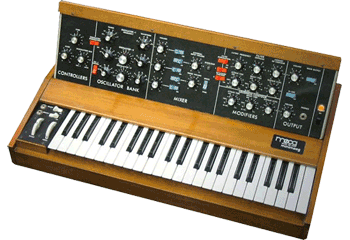
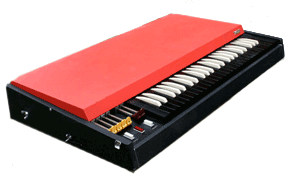
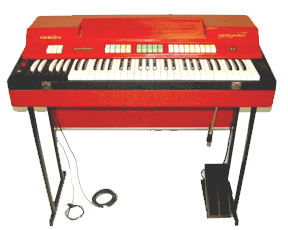
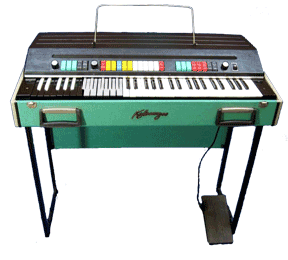
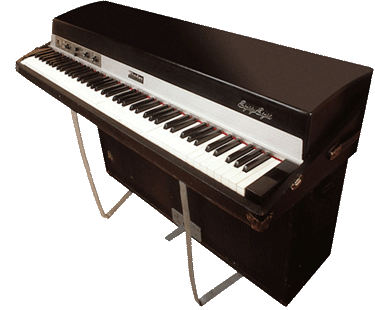 Press your hand to these keys for the first time and you’ll hear it, the smooth electric ring with a touch of grit and lots of soul. It’s hard not to sound good on a keyboard this classic, but the best players can muscle out a powerful growl. You probably know the sound.
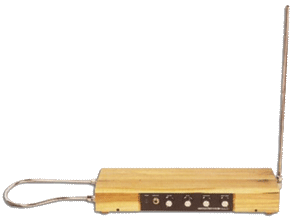 The Theremin was one of the first electronic instruments and the only musical instrument that is played without being touched. The looping antenna on the left controls volume, and the straight antenna on the right controls pitch.