uReview: Neil Young “Trans”

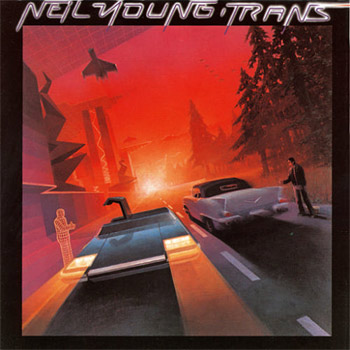
Trans

I was a late bloomer to Neil Young’s music and still no expert. But I’m curious about this synthesized 1982 departure called Trans. What’s the score on this one?

12345678910 (34 votes, average: 6.26 out of 10)
Loading ... Loading ...

“We R In Control”

:D CD Reissue | 1999 | Polydor | buy ]
:) Original Vinyl | 1982 | Geffen | ebay ]

Silver Apples (self-titled)

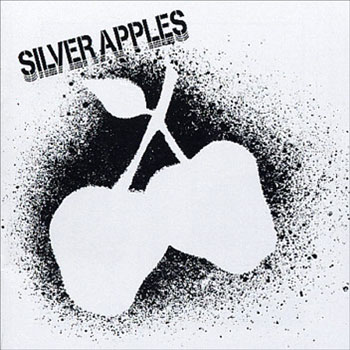
Silver Apples

Of all records that are considered “ahead of its time,” this may be the modern age’s strongest contender. There are thousands of albums from the sixties that didn’t jive with the times, and many that are still too ahead of its time; what happens in the evolution of music since then determines what we consider to be the most influential. In terms of popular electronic music, nothing really touches what the Silver Apples started up in 68.

To best understand what the Apples are all about, you have to check the diagram in the liner notes. They are only a duo, comprising equally complicated setups: Danny Taylors’ expansive drum kit and Simeon’s boggling assortment of electronic treats. Custom synths maintain several layers of oscillating drones over sequenced looping bass lines, while tape machines implement found sound recordings (bewilderingly predicting the sampling craze and adding even more their legendary status). Taylors’ drumming seals the deal with programmatic beats that would spawn or influence kit players from Can’s Jaki Liebezeit all the way to hip hop drummers such as ?uestlove. The Silver Apples were staggeringly prescient in their technical setup, but perhaps even more influential was their use of the drone. Hypnotic and trance inducing, I can’t imagine any modern day electronic pop that shouldn’t show some allegiance to this groundbreaking record.

Period vocal stylings sometimes distract modern day electro fiends, but they are surely missing out. The tunework and lyrics are the match of most good psych records from the time, and this record consistently continues to blow minds just as hard today as it must have back then, to the few who listened. The new Phoenix vinyl reissue carries a pretty high price tag, but looks like its worth the price, limited to 1,000 copies. For those looking to dive in at cost, check out the MCA twofer CD reissue, which also contains their next album, Contact. Positively essential for electronic and psych listeners.

“Lovefingers”

:) Vinyl Reissue | 2008 | Phoenix | 180G | buy from dustygroove ]
:D CD Reissue | 1997 | MCA | w/ Contact | buy from amazon ]

The United States Of America (self-titled)

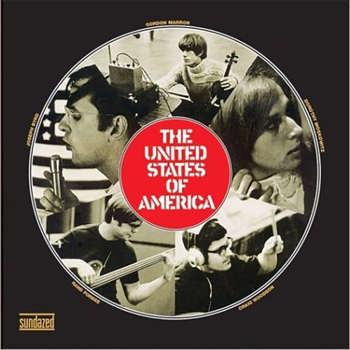
The United States of America

The United States of America album is the product of Joseph Byrd, former FLUXUS member, artist and UCLA instructor who managed to combine experimental art and early synthesizer technology with psychedelic rock in creating this brilliant record. Employing percussion instruments, electric violin and acoustic strings, electric bass, various keyboards, homemade oscillators and ring modulators, and Dorothy Moskowitz’s confident soprano, this record shows surprising pop capability for an avant garde project.

This is a pioneering record and worth your attention. Everybody wouldn’t be expected to sit through campy synth exercises like I Wouldn’t Leave My Wooden Wife For You, Sugar, but many tracks hold up as strong experimental rock numbers. It’s a must listen for fans of ear candy, or for those who love delving into the details of these albums. Tracks like the opener, The American Metaphysical Circus, feature layers of burbly oscillators, organ, calliope and what must be sound effects or field recordings. Other tunes tear it apart pretty hard for a guitar-less album like Hard Coming Love and some more restrained numbers make great careful listening material like the excellent Cloud Song. Dorothy’s vocals are very good and lead with unexpectedly memorable lines.

The melodies and flow of the record, the sampled recurring themes, and the politically charged lyrics give this album a concept record feel. It was critically acclaimed on its release in 1968 but failed to sell, of course. The band broke up after their masterful debut though Byrd would continue to create experimental music and Moskowitz would eventually sing with Country Joe McDonald.

Sundazed just reissued this album as a hi-def vinyl LP, and for a limited run it will be packaged with a repro of the manilla envelope that came with the original. If this one has been hovering on your list for years, now is the time to pick it up!

“Coming Down”

:) Vinyl Reissue | 2008 | Sundazed | Buy from Sundazed ]
:D CD Reissue | 2004 | Sundazed | Buy from Sundazed | amazon]

Electronic Pioneers: Louis & Bebe Barron “Forbidden Planet”

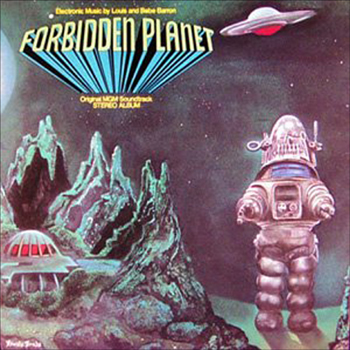
Forbidden Planet

In 1956, MGM released the science fiction film, Forbidden Planet. The picture stars Walter Pidgeon, Anne Francis, Leslie Neilson and the brilliant Robby The Robot. How exciting it must have been to experience this film in the theater in 1956! Technically speaking, the film is remarkable, featuring sophisticated visual effects and a visionary musical score.

For Forbidden Planet, married NY duo Louis & Bebe Barron produced one of the very first wholly electronic movie scores. The music was created using custom electronic circuits built by the Barrons, circuitry that they claim was influenced by cybernetics.

Louis and Bebe Barron:

“In Scoring Forbidden Planet – as in all our work – we created individual cybernetic circuits for particular themes and leit motifs, rather than using standard sound generators. Actually, each circuit has a characteristic activity pattern as well as a ‘voice.’ “

These “cybernetic circuits” were used to build multi-musical sound layers, as well as most of the film’s “inorganic” sound effects. This is a wonderful achievement: the basic connection created between the sound effects and the sound music. The SFX and the musical score are interwoven to create a neat, all-electronic union between diegetic and non-diegetic sound.

Tape echo and reverberation seem to be used widely as a sound processor within this production, helping to further a “space-like” or “far-out” atmosphere. All-together, this pioneer production is a fine example of pre-synthesizer electronic music making!

This score might not be the easiest to listen to on its own. I would recommend viewing the movie first, paying special attention to how the electronic music influences the film, and vice-versa. Later, listen to the soundtrack alone, preferably with headphones (there are some excellent uses of stereophonic sound within). I can assure you you won’t be disappointed, or un-moved. This soundtrack is a must have for those interested in early electronic music and electronic music history. A memorable release!

“Battle With The Invisible Monster”

:D CD Reissue: 1995 | Small Planet Records | Buy From GNP Crescendo ]

(more…)

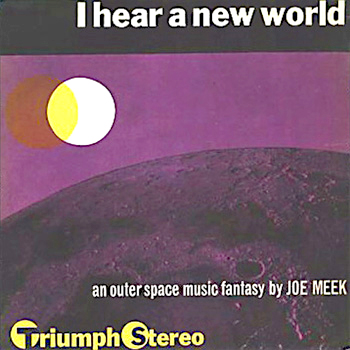
Joe Meek & The Blue Men “I Hear A New World”

Hear A New World

What a fine outer space adventure album! Several years before British producer Joe Meek and the Tornadoes scored an international super-hit with Telstar, Meek had composed and recorded his masterpiece, “I Hear a New World,” an imaginative musical look at a different life on the Moon.

In 1960, the moon remained very much a wide mystery, and was thus ripe for soundtrack imaginations. Meek stepped forward to create a lunar adventure record, a record well ahead of the times. Joe Meek:

“I wanted to create a picture in music of what could be up there in outer space. At first I was going to record with music that was completely out of this world but realized that it would have very little entertainment value, so I kept the construction of the music down to earth.”

Helping to keep Meek’s compositions “down to earth” was Rod Freeman, the musical director and arranger for the project (the music itself was performed by the Blue Men, formerly the skiffle group the West Five). Freeman, it seems, saved IHANW from becoming a stereo sound effects record. Accounts of Meek’s early demos for IHANW are that the tracks were a challenging listen.

The music production and engineering for this recording was truly quite unique and visionary. In a pre-synthesizer world, Meek used a wide array of homemade electronics and unique instruments to achieve a signature sound. Most notably, perhaps, was the Clavioline, a three-octave keyboard instrument somewhere between an organ and a simple analog synthesizer. The Clavioline handles many of the lead melodies on this record (Telstar too!). The Hawaiian guitar was widely used. Different types of echo effects (tape echo and chamber echo) are also used liberally, and to great effect. It is important to note that Meek recorded this, along with most of his productions, at his home recording studio in North London.

IHANW was never wholly released until recently. In 1960 a sampler EP was released by Triumph Records, including only four of the twelve original tracks. Recorded in stereophonic sound, the sampler was sent to retail stores as a demonstration of what “stereo” was capable of (then, a young technology). An interesting marketing technique!

The 2001 CD release on RPM is well done, with the 12 original tracks, plus 30 minutes of interviews with Meek (probably only appealing to enthusiasts), as well as a brief film clip of Meek from 1964, for computer viewing. Good readings available inside, too (from which many of the facts included here are taken).

There are discernable musical highlights inside this record, however it is recommended to listen to “I Hear a New World” in its entirety at first, and with headphones. Meek takes you on a memorable journey around the moon, stopping in to visit different lunar civilizations! Don’t miss it!

“The Bublight”

[ Buy From Amazon | Search eBay ]