Archive for the ‘ Pop ’ Category

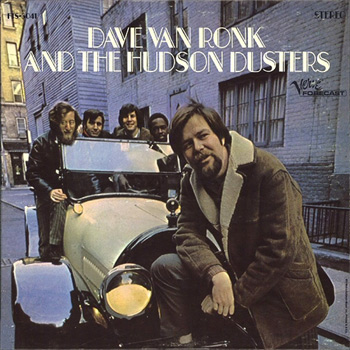
Dave Van Ronk and the Hudson Dusters

The Hudson Dusters was a band put together by legendary folksinger Dave Van Ronk in a short-lived attempt to buy into the folk-rock craze that hit the States in the mid-sixties. Though Van Ronk was one of the founding fathers of the original Greenwich Village revival, he had never really conformed to any of the stereotypes which were so quick to develop among his contemporaries. Thus, the music which developed out his “going electric” was far more eccentric than most people’s. This was no attempt to simply copycat (and thus capitalize on) Dylan’s new aesthetics, this was an artist expanding his sonic palate on his own terms.

Dave Van Ronk and the Hudson Dusters, like any Van Ronk record, is an eclectic experience. Not only does the band draw from folk, blues, jazz and rock and roll traditions, but Van Ronk’s unique sense of humor and unmistakable whiskey-and-tobacco voice lend the music a surreal edge. In fact, I’d argue that the convoluted middle-class satire of “Mister Middle” almost lands the proceedings in Mothers of Invention territory. Though neither it nor “Keep Off the Grass” should be considered the era’s sharpest attempts at social commentary, the tongue-in-cheek approach and adventurous musical arrangements make them more entertaining than most such material.

I have to admit that I’ve never been wild about Joni Mitchell, but Dave Van Ronk’s back-to-back takes on “Chelsea Morning” and “Both Sides Now” are surprisingly successful. This is one of those instances where you wouldn’t expect the artist and the material to click, but somehow the deadpan earthiness of the interpreter lends new angles to what are otherwise rather spacey and introverted lyrics. Apparently Mitchell herself praised Van Ronk’s recording of “Both Sides Now” as being definitive, but I’ll leave that one up to the reader to decide.

The Hudson Dusters also run through a few numbers previously recorded by Van Ronk on his acoustic records, such as the Reverend Gary Davis’ “Cocaine Blues” – which has always been something of a signature song for the singer – and “Dink’s Song,” in which subtle strings underscore Van Ronk’s rough-yet-tender vocal performance. The goofy show tune “Swinging On A Star” would also become a Van Ronk standard in the years to come, though my own reaction to this one is lukewarm at best. I much prefer their psychedelic garage take on Dallas Frazier’s old rock and roll chestnut “Alley Oop” with it’s odd, echoplexed vocal chorus.

With a few notable exceptions, the majority of Van Ronk’s 1960s recordings remain unreleased or out-of-print on compact disc, and unfortunately this is one of the former. Don’t let this unfortunate detail deter you, though; Hudson Dusters may not be the definitive statement from Dave Van Ronk (he tended to stick to the acoustic guitar for a reason), but as a rare electric anomaly in his catalog, it is definitely worth checking out.

Audio clip: Adobe Flash Player (version 9 or above) is required to play this audio clip. Download the latest version here. You also need to have JavaScript enabled in your browser.

“Both Sides Now”

:) Original | 1967 | Verve/Folkways | search ebay ]
:D

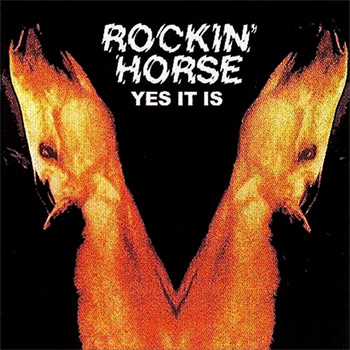
Rockin’ Horse “Yes It Is”

Jimmy Campbell was perhaps the most talented “unknown” musician to come out of the early 60s Liverpool scene.  One of his earliest bands, the Kirkbys, played Beatles’ influenced beat music and folkrock, releasing a few respectable singles in the mid 60s.  When psychedelia became the trend, Campbell put together the 23rd Turnoff, who released just one single, the excellent “Michaelangelo.”  In the middle of Campbell’s solo career (he released 3 albums) he took some time off and with the help of ex-Merseybeat Billy Kinsley put together Rockin’ Horse.  Most of the tracks on Yes It Is were written by Campbell with Kinsley contributing just 3 tunes.

Yes It is, released in 1970, is a mixture of power pop and Band influenced rural rock.  The Band influenced ditties are the weakest numbers (there’s just three) on the album with the notable exception of a very good rural track titled ”Son, Son.”  The remainder of Yes It Is is first class power pop and probably the most powerful music of Campbell’s career.  Tracks such as “Biggest Gossip In Town” and “Oh Carol, I’m So Sad” hark back to Campbell’s early British Invasion roots.   These two gems characterize a unique album that has a  ragged, ramshackle feel – very intriguing.  Others songs like “Delicate Situation”, “Don’t You Ever Think I Cry”, “I’m Trying To Forget You” and the title track recall late period Beatles – think Abbey Road or Let It Be.

So with the exception of two duds, this is an excellent set of early 70s rock n roll by one of rock’s forgotten (albeit eccentric) talents.  Other notables:  the whimsical but tuneful ”You’re Spending All My Money” and the rocking “Stayed Out Late Last Night.”  Rev-Ola reissued Yes It Is in 2004 with plenty of worthy extras.

Audio clip: Adobe Flash Player (version 9 or above) is required to play this audio clip. Download the latest version here. You also need to have JavaScript enabled in your browser.

“Stayed Out Late Last Night”

:D Reissue | 2004 | Revola | get it here ]
:) Original | 1970 | Philips | search ebay ]

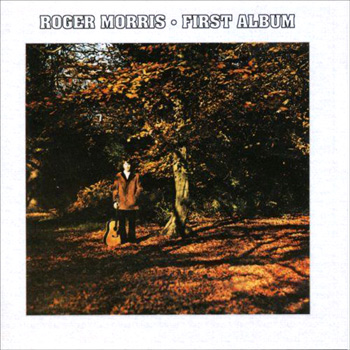
Roger Morris “First Album”

Roger Morris’ First Album, released by Emi/Regal Zonophone in 1972, stakes a claim as one of the most American sounding British-folk albums of the seventies. Along with the painfully obscure solo album by Ernie Graham, First Album is one of a handful of rustic singer-songwriter lps of the era that landed unjustly under the radar. Owing much to the back-to-the-roots sound and vibe of The Band, Bobby Charles, and Hungry Chuck, and falling somewhere in between the British folk of the late 60s, the British country-rock of the early 70s, and the pub rock renaissance that would follow several years later, this album features contributions from a host of talented British musicians, including: the popular De Lisle Harper; Glen Campbell of Juicy Lucy and The Misunderstood; Family’s John Weider; Rod Coombes of Strawbs and later, Stealer’s Wheel; Chris Mercer; Terry Stannard of Kokomo; and Bruce Rowlands of the Greaseband. Obviously, the playing on this album is top notch. Furthermore, Morris comes across as a surprisingly accomplished songwriter.

On album opener “Taken for Granted” Morris mourns the loss of past loves to the tune of a folky country-rock number that calls to mind the early work of Help Yourself, as well as Ian Matthews. “Golightly’s Almanac” has a funky Bearsville ragtime feel, complete with a Tuba holding down the low end and a catchy horn part, sounding very similar to The Band’s “Rag Mama Rag” or Hungry Chuck’s “Hats Off America.” Morris’ vocals, which can sometimes be hit or miss, really excel on “Showdown”, one of the standout tracks of the set.  “Northern Star” features some tasty pedal steel and fiddle riffing courtesy of talented multi-instrumentalist John Weider, while “Livin’ On Memories” sounds similar to “Orange Juice Blues” off of The Basement Tapes, with Morris taking a cue from Richard Manuel’s vocal phrasing.

Morris’ account of one man’s experience in the years after the Civil War ,“All My Riches,” is his equivalent to The Band’s epic “The Night They Drove Old Dixie Down.” Morris’ tune, while not a total failure, never comes close to reaching the heights of The Band’s legendary song. If there’s any complaint to be made about First Album, it would be that Morris’ influences are worn right on his sleeves. However, this was in fact his first album, so you’ve gotta give the guy a break for letting his influences show a little bit.

Needless to say, First Album is essential listening for fans of the rustic Americana The Band perfected on their first three records, as well as fans of Silver Pistol era Brinsley Schwarz, early McGuiness Flint and Help Yourself, and Matthews Southern Comfort. Simply one of the best obscure British folk/Americana flavored singer-songwriter lps of the era, this one is worth tracking down. Although this, his first lp, was virtually ignored upon its initial release, Roger would later find his audience when he went on to achieve international recognition as the guitarist in The Psychedelic Furs. In 2009 Bella Terra Presents released a tastefully remastered limited edition cd reissue featuring four previously unreleased bonus tracks that were recorded just a year after First Album, as well the original album artwork and a lyric sheet insert. That same year Lilith Records released a version pressed on 180 gram vinyl. Take your pick!

Audio clip: Adobe Flash Player (version 9 or above) is required to play this audio clip. Download the latest version here. You also need to have JavaScript enabled in your browser.

“Showdown”

:) Original | 1972 | Regal Zonophone | search ebay ]
:D Reissue | 2009 | Riverman | get it here ]

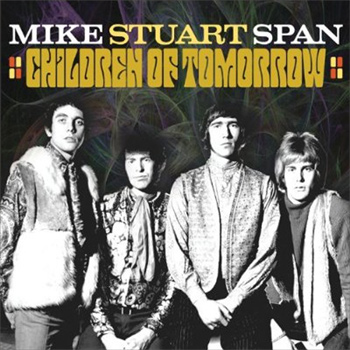
Mike Stuart Span “Children of Tomorrow”

The cosmopolitan seaside resort of Brighton, Sussex – my own birthplace, as it happens – has been a Mecca for the more unbuttoned forms of the performing arts ever since the louche patronage of the Prince Regent, later King George IV. Strangely, especially given its nearness to “Swinging” London, it produced only a sparse crop of memorable artists and groups in the halcyon years of pop and rock music. During their brief sojourn as a recording act, the Mike Stuart Span were the only such from Brighton – and that at the height of the sixties beat/psych era when groups were being signed nationwide in hundreds.

Like many of their contemporaries, they launched as a beat group, became a mod-soul outfit, then floated off into psychedelia before gravitating towards progressive rock. Starting around 1963 as the Mighty Atoms, they underwent numerous personnel changes and name-changes, first to the Extremes and then to the Mike Stuart Span – after their vocalist, Stuart Michael Hobday – before landing a contract with EMI Columbia in 1966 under which they released a couple of Stax-ish singles. These both bombed and EMI let the band go. Dumping their keyboards and horn section, the remaining four-piece – Hobday, guitarist Brian Bennett,  bassist Roger McCabe and drummer Gary Murphy – recorded an acid-tinged cover of “Rescue Me” and a couple of similarly lysergic originals for Decca, who branded these insufficiently commercial and declined to release them at all. Taking what appeared to be the only remaining path, the band cut, at their own expense, two unashamedly psychedelic originals “Children Of Tomorrow” and “Concerto Of Thoughts” and issued these in 1967 in a run of 500 singles on a small independent label, Jewel. The record received sufficient exposure and critical acclaim to gain them local support slots to Cream and Hendrix, a couple of John Peel sessions, a BBC TV documentary (on struggling rock bands!), a misguided pure-pop single on Fontana and, eventually, an offer to sign to the UK branch of Elektra, under condition that they change their name; this they did yet again, to Leviathan. Two fine guitar-led prog-rock singles on the new label came and went unnoticed in 1969, and sessions for an LP were completed but Elektra head honcho Jak Holzman was dissatisfied with the product. With the prospect of the album’s release fading, the band called it a day and split late in ’69, all but Bennett leaving the music industry. “Children Of Tomorrow” resurfaced as an uber-rarity during the 1980s psych revival. Interest slowly grew and a compilation (officially-sanctioned) of most of the band’s psych/prog-era studio work finally appeared in 1996.

This new collection, Children Of Tomorrow, represents the entire studio output of the band in all its incarnations on all labels apart from about half of the aborted Elektra album, and gives a fascinating insight into a band exploring every avenue to try to make the big-time, with talent to spare but luck totally lacking. The whole story is laid out in the splendid accompanying booklet. Of the music, the early soul-based tracks are solid and energetic if unoriginal, while the Decca efforts are worthy generic acid-pop. From here things improve markedly; both sides of the Jewel single are splendidly druggy stuff, fully deserving of their high rating. But best of all IMHO are the demos the band cut before the Elektra signing and the sides subsequently released as Leviathan singles; the tight arrangements, imperious vocals and wallpaper-stripping guitar work of “World In My Head”, “Second Production”, “Flames”, “Blue Day” and “Remember The Times” suggest that the cancelled album would have been a fine prog-guitar artefact. Allegedly the master tapes still languish in Elektra’s vaults, and Warner has hinted in the past about finally releasing the album in original form. If it ever appears, it will almost certainly have been worth the wait.

Audio clip: Adobe Flash Player (version 9 or above) is required to play this audio clip. Download the latest version here. You also need to have JavaScript enabled in your browser.

“Children of Tomorrow”

:D Compilation | 2011 | Grapefruit | buy here ]

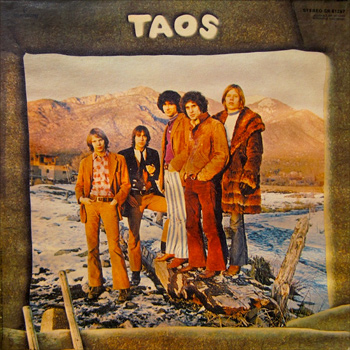
Taos “Taos”

Here’s an unusual jewel, released on Mercury Records in 1971. The band Taos was actually a quintet pieced together by a group of young men who had moved to the legendary Taos commune in the early 1970s, namely: Jeff Baker on guitar and vocals, Steve Oppenheim on keyboards and vocals, Albie Ciappa on drums, Burt Levine on guitar and banjo, and Kit Bedford on bass, with the occasional intermixing of instruments going on in between cuts. If the band’s commune connection leads you into expecting some sort of stoned, improvisational musical meanderings, however, you’re in for a surprise: their sole, self-titled record is pop music all the way.

Indeed, the band itself is surprisingly together, tempering mildly eccentric diversions into psychedelia and country music with a solid foundation in 1960s rock and roll. If there’s one band to which Taos owes its biggest debt, I’d say it would have to be The Beatles. Kit Bedford’s warm, melodic bass work channels Paul McCartney all the way, while the group’s vocal harmonies show a tendency to lean more towards the ragged schoolboy charm of the Four than the choirboy constructions of American groups such as the Byrds, or the Mamas and Papas. This influence is not to say that Taos lacks an identity of its own, however. On the contrary, they manage to take this influence in surprising directions, whether it’s the lonesome cosmic cowboy pastiche “After So Long” or the phased psychedelic boogie of “Twenty Thousand Miles In the Air Again”.

Despite the general cohesiveness of the album, however, there are the occasional faults, such as the unnecessary, repeating theme “The Day Begins,” which should have simply been turned into a full-fledged song rather than left as fragmentary interruptions in the tracklist. Every now and again the musicians also reveal a slight weakness in the vocal department, as the slightly squirrely lead on “Morning Sun” illustrates. Lastly, the song lyrics aren’t really worth shedding too much ink over – there’s certainly no metaphysical contemplation or social commentary going on here, whatever other Sixties sensibilities the record may boast. These latter complaints border on quibbling, though, because the music here is almost too much fun to criticize. Again, this is pop music, and should be enjoyed for what it is. I think that Taos is certainly consistent enough that, if you’re digging the tracks below, you’re gonna like what you hear the rest of the way through.

Unfortunately, Taos is currently unavailable digitally. Yeah, there had to be a bum note at the end of all this. It looks as if you all are going to have to search this one out on vinyl, though at the time of writing this article it looks as though there are at least a few copies haunting eBay for around ten or fifteen dollars apiece, which certainly ain’t bad. And speaking of the vinyl, this record comes adorned in a really great gatefold sleeve, with pictures of the band rehearsing and bumming around Taos. I’m almost tempted to imagine the psychedelic, southwestern Hard Day’s Night bouncing around in these kids’ heads.

Audio clip: Adobe Flash Player (version 9 or above) is required to play this audio clip. Download the latest version here. You also need to have JavaScript enabled in your browser.

“After So Long (So Long)”

:) Original | 1970 | Mercury | search ebay ]

Billy Nicholls “Would You Believe”

For a man who’s enjoyed a solid five-decade membership of the British rock establishment, Billy Nicholls must be one of its least-known figures. From being engaged as a staff songwriter to Andrew Loog Oldham’s upstart Immediate Records at the tender age of eighteen, to composer of “I Can’t Stop Loving You (Though I Try)”, the royalties from the multiple cover versions of which should assure his pension, to MD of the Who’s and Pete Townshend’s concert activities for the last thirty-odd years, Nicholls has enjoyed a fruitful but surprisingly low-profile relationship with the industry, only recently achieving acclaim as the author of one of psychedelia’s great “lost” gems.

The history of Would You Believe is as engaging a tale as that of Nicholls himself. When Oldham fell out with the Stones in 1967 he redirected all his resources into making the youthful Nicholls a star of the psychedelic pop scene. The results were the single “Would You Believe”, which hit the racks in January 1968, and the like-titled album that followed in short order. The single has been described as “the most over-produced record of the sixties”, and with reason; a modest psych-pop love song, it’s swathed in overblown orchestration including baroque strings, harpsichord, banjo (!), tuba (!!), and demented answer-back vocals from Steve Marriott. A trifle late for the high tide of UK psych, it failed to trouble the charts. Unfazed, Oldham and Nicholls pressed on with the album, Nicholls providing a steady stream of similarly well-crafted ditties and a bevy of top-rated London sessionmen providing the backings, thankfully with somewhat more subtlety than on the prototype cut. The album was ready for pressing just as the revelation of Oldham’s reckless financial overstretch brought about Immediate’s overnight demise, and only about a hundred copies ever made it to wax, most of which somehow surfaced in Sweden. The album became one of the mythical lost albums of the sixties, and original copies now fetch over a grand in GBP.

The record itself was heralded then, and is still often described today, as the English answer to Pet Sounds, with Nicholls’s songwriting being compared to Brian Wilson’s. This is blatant hype, and the writing certainly doesn’t get close, but the album is still the epitome of sixties Britsike, a bunch of fine acid-pop songs rendered with glorious harmonies and superb lysergic arrangements that wouldn’t have disgraced George Martin. Put it this way, if you like Ogden’s Nut Gone Flake or A Teenage Opera or even The Who Sell Out you’ll enjoy this. The sound and the production are sometimes closer to the Stones’ “We Love You” / Satanic Majesties output, unsurprising since it was recorded in the same studio with many of the same sessioneers, including the incomparable Nicky Hopkins on assorted keys, though this is – the title track apart – a far more taut and less self-indulgent collection than the Glimmer Twins’ psychedelic endeavours. Sundry Small Faces hung around, with Marriott contributing huge fuzz-psych guitar to “Girl From New York”. Indeed there’s plenty of sonic variety, from the tight structure and Townshend-style telegraph guitar of “London Social Degree” (go figure the acronym there, folks), through the lush Byrdsy 12-string-driven “(Cut And) Come Again” which garnered a cover from Del Shannon,  to the full-on acid rock treatments of “Being Happy” and “It Brings me Down” with its trippy false ending.

After the failure of Would You Believe Nicholls took a back seat from stardom and began a belated apprenticeship in the music industry, initially working on low-profile projects with Ronnie Lane and old acquaintance Townshend whilst gaining an understanding of all its facets that would stand him in good stead for the next forty years. He released nothing new under his own name until 1974’s Love Songs, a solid soft-rock venture that deserves a review of its own here, and may well get one. Meanwhile Would You Believe is readily available as a CD reissue, or you can get seven of its eleven songs – plus three outtakes from the album’s sessions, which are every bit as good as those eventually used – on Nicholls’s fine career retrospective Forever’s No Time At All.

Audio clip: Adobe Flash Player (version 9 or above) is required to play this audio clip. Download the latest version here. You also need to have JavaScript enabled in your browser.

“London Social Degree”

:) Original | 1968 | Immediate | search ebay ]
:D Anthology | 2005 | Castle | buy here ]

Klaatu “3:47 EST”

In the late summer of the U.S. Bicentennial, an album was unleashed upon the public which caused much rumor-mongering and gossip within the music world. That album was 3:47 EST, the debut album by Canadian progressive/psychedelic group Klaatu.  The album was hailed superb by critics and fans alike.  Furthermore, what people couldn’t get over was the striking similarity between the style of some of the tunes on the album with The Beatles’ music.  Thus, the inevitable “did The Beatles reunite to make an album?” rumors began.

Supposedly, in 1966, The Beatles recorded enough material to fill an entire album that was intended to be a follow up to Revolver.  Of course, the master tapes were somehow “lost” from Abbey Road studios.  Dealing with Paul McCartney’s alleged “death” in a car accident, The Beatles didn’t want to be bothered with re-recording the album.  When a Paul McCartney look-alike stepped in to take “dead Paul’s” place, The Beatles decided to stop touring and began working on an entirely new album which turned out to be Sgt. Pepper’s Lonely Hearts Club Band.  1975 rolled around, and these very “missing” master tapes were rediscovered while researchers were gathering information for a future Beatles documentary entitled The Long And Winding Road (which became the Anthology series twenty years later).  The remaining Beatles decided it would be a great opportunity to release the recorded material as a proper album, sort of in tribute to the “late” James Paul McCartney.  They came to the conclusion that it would be best to release the album with no songwriting credits, and no photographs.  That way, the album could be purchased and enjoyed solely on its musical merits, and free of any Beatles-hype.

Sounds ridiculous, doesn’t it?  Well, maybe not completely…

When the record hit store shelves, people began wondering a bit.  Why was the album put out by Capitol records (which was the label The Beatles songs were released on in America and Canada)?  Why were there no pictures or names of the band members anywhere on the sleeve?  Why were there no proper production or songwriting credits given, only “Produced by Klaatu”, and “All selections composed by Klaatu”?  ”Klaatu” was the name of the alien from the film The Day The Earth Stood Still, and why on Ringo Starr’s Goodnight Vienna album was there a photo of Ringo dressed as Klaatu, standing with Gort (the robot in the film) in front of the spaceship from the movie?  Is that just an odd coincidence?  Why did a few of the songs on the album have vocals which sounded a lot like Paul McCartney and John Lennon?  The questions go on and on.  I don’t want to waste any more of your time on this entire back-story.  There’s tons of information available on the internet.  What is for sure, however, is the pure listening joy this album delivers, no matter who was responsible for it!  (By the way, Klaatu was/is a real band from Toronto, Ontario.  They released several other critically-acclaimed albums, and went on tour.  They’re still performing today.)

“Calling Occupants (Of Interplanetary Craft)” starts off the album, and is probably Klaatu’s best remembered song, although it only stalled at #62 on Billboard’s Hot 100.  A year later, The Carpenters recorded the song, where it reached a respectable #32 on Billboard’s Hot 100.  A perfect piece of proggy-space pop, with a memorable shout-out to visitors from outer space.  “California Jam” is track two, and sounds more like early ’70s AM Bubblegum pop than The Beatles.  A good, uptempo power-pop tune, though.  The album continues with “Anus Of Uranus,” which is a bit of a heavier song with a silly title.  Side one finishes with the second highlight of the album (the first being “Calling Occupants”), “Sub-Rosa Subway”.  Now, this is where I can begin to understand The Beatles comparisons.  The singer certainly sounds a lot like Paul McCartney, and the basslines are undeniably McCartney-esque.  But still, the song sounds a bit too modern to have been supposedly recorded in mid-1966.  This is a song which you’ll probably find yourself putting on repeat.

The album continues being a blast to listen to.  The production is great, the songs are great, the music is great!  True, songs like “Sir Bodsworth Rugglesby III” sound a bit like something the Muppets (Dr. Teeth and the Electric Mayhem!) may have recorded, so you’re not going to find a life-changing album here by any means.  But, who cares?  This album finds its way to my turntable almost on a bi-weekly basis, when I want to listen to something fun and arrogance-free.  Pick it up if you have the chance.  You’ll be wanting to purchase their other albums after hearing this, which are just as much fun.  This record will put a smile on your face, for sure.

Audio clip: Adobe Flash Player (version 9 or above) is required to play this audio clip. Download the latest version here. You also need to have JavaScript enabled in your browser.

“Sub-Rosa Subway”

:D Reissue | 2010 | Indie Europe/Zoom | buy here ]
:) Original | 1976 | Capitol | search ebay ]
8) Spotify link | listen ]

uReview: Jim Sullivan “U.F.O”

12345678910 (34 votes, average: 8.18 out of 10)
Loading ... Loading ...

I had heard a lot about Jim Sullivan’s UFO before Light in the Attic’s 2010 reissue and jumped at the chance to finally get my hands on a copy. This one won our poll of the best reissues from 2010, so from any big fans of this record, let’s hear your thoughts on it…

:) Reissue | 2010 | Light in the attic | buy here ]

The Klan “Join Us”

In America “The Klan” might have some negative connotations, but to a group of kids in Brussels in 1963 it sounded like the perfect band name (good enough to have chosen it over their original name “Los Ombres“). They soon began adding a disclaimer to their name, written as “The Klan (Belgium Band),” to prevent any further confusion.

Regardless of the cheeky title, The Klan were a wonderful baroque pop outfit with one exceptional full length LP to their credit. The songs on 1966′s Join Us are incredibly musical and far more considered than the typical pop fair of the time.

Like most bands of the era, this record touches on all facets of the Beatles but mainly cops the folk rock shamble of Help! and Revolver, with heavy Harrison style vocals. The lush string/brass arrangements and studio effects occasionally take the record into mild psych territory, like on the gorgeous “And I Love It So” and “Already Mine” with it’s vaguely eastern refrain. There’s also a light flair for Spector-esque grandiosity here, with some songs aproaching the Brill Building style.

It’s difficult to pick favorites from such a solid album, but some standouts include opener “Fify the Fly” which outshines its goofy subject matter with a pretty melody and a bouncy harpsichord line, and “One of My Dreams” which could easily have been a mid-period Harrison song.

With all the Beatles references aside, The Klan wrote some fantastic material and although they did not achieve much notoriety outside of their home country, these songs definitely deserve to be heard apart from their mid-60s context to truly appreciate the unique perspective on this record.

“Join Us” has yet to be reissued on CD, but LPs do turn up on eBay frequently (especially the 1967 Brazilian pressing).

Audio clip: Adobe Flash Player (version 9 or above) is required to play this audio clip. Download the latest version here. You also need to have JavaScript enabled in your browser.

“Fify The Fly”

:) Original | 1966 | Palette | search ]

Gallery “Nice to be with You”

In 1972 Sussex Records released the first and only lp by the Detroit based pop group Gallery, fronted by singer/songwriter Jim Gold. Nice to be with You was produced and arranged by none other than legendary Motown axe-slinger extraordinaire and fuzzy funk brother Dennis Coffey (who also served as producer on the cult classic psych/folk/funk lp Cold Fact by Rodriguez) and his partner in crime, sleeper soul and funk producer Mike Theodore. Gallery’s sole lp is an entertaining slice of wax with a mostly soft-rock vibe that runs the gamut from country-rock to pop-psych to doo-wop to funk, and back again to pop–all the while standing side by side with soft-rock contemporaries of the time like Bread as well as soft-psych folk rock luminaries like Jim Sullivan. Thanks in no small part to the killer team of Coffey and Theodore, a handful of nice production touches really add to the tunes and result in album that stands a cut above many of the soft-rock releases of the time.

The boys kick it off with “Island in the Sun”, a sunny pop tune complete with harpsichord, glockenspiel, marimba, and pedal steel riffs with a Southern Pacific vibe. Things really start to get interesting with the next track, “Louisiana Line,” when acoustic guitar and twangy Telecaster give way to a funky country-rock tune with even more tasteful touches on the pedal steel guitar. Sounding like a slightly funkier version of Poco, the song calls to mind several of the more upbeat tunes on Ian and Sylvia’s excellent funky rural lp Great Speckled Bird, as well as “Move Over” from Bread’s self titled 1969 lp. “Louisiana Line” stands out as one the premier cuts on the album with a funky backwoods beat, an extremely catchy chorus with three part harmonies, and tasty Telecaster twangin’. “Ginger Haired Man” mines similar territory as “Louisiana Line,” featuring bluesy harmonica blowing, and yet another irresistibly catchy chorus.

On the other side of the spectrum, “Gee Whiz” is a 50′s throwback flavored with a touch of doo-wop that calls to mind the the pop-country of the Everly Brothers and their classic tune  “All I Have to Do is Dream,” as well as the ubiquitous “Earth Angel.” “I Believe in Music” pairs a tasty tremolo guitar riff and cowbell with a pre-disco/later day Motown sound full of tambourines, slinky Stratocasters doin’ the disco dance, and of course, syrupy strings. Midway through the song a bold synthesizer make a well appreciated yet extremely unexpected appearance. “Big City Miss Ruth Ann,” the third and final single from the album, sounds like a more polished take on the roadhouse rock of fellow Michigan natives Riley.

The million selling (!) title track, “Nice to be WIth You” is disappointingly sappy, suffering from just a touch too much sentimentality and over-production. On the same token, “Lover’s Hideaway” and “He Will Break Your Heart” are throwaway tracks that lack lyrical depth, catchiness, and punch. If there’s one bum note concerning Nice to Be With You’, it would be that Side B lacks overall when compared with Side A. Furthermore, several of the tracks on Side B seem to make fervent use of blatantly recycled tropes from Side A. Still, the album as a whole is such an entertaining listen in the forgotten early 70s soft-rock vein that no slight lack of killer tracks on Side B is gonna keep this gem off your table.

All things considered, Nice to Be With You is an enjoyable listen by a talented young band that incorporates a handful of early 70s sounds. One minute Gallery recalls the classic pop-psych of Buffalo Springfield; another moment they recall a slightly less greasy Grandma’s Roadhouse; then they step back in time and channel the timeless sound of 50s AM pop; when you’re least expecting it they all of the sudden sound like the Bee Gees after they discovered that disco beat! The bottom line is this–if you’re into vintage pop music, Nice to Be With You has certainly got something that will undoubtably float your boat.

Audio clip: Adobe Flash Player (version 9 or above) is required to play this audio clip. Download the latest version here. You also need to have JavaScript enabled in your browser.

“Louisiana Line”

:) Original | 1972 | Sussex | search ]
:D Reissue | 2010 | Fuel | buy ]