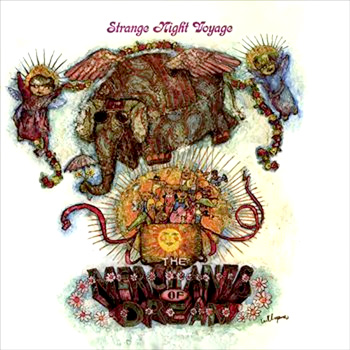
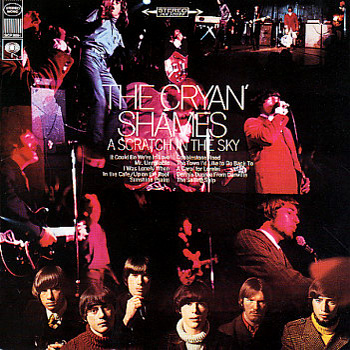
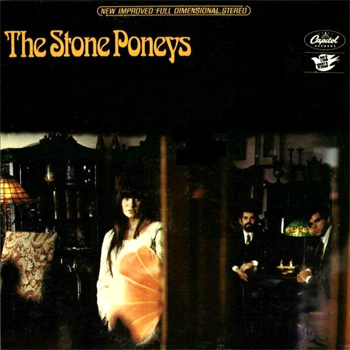
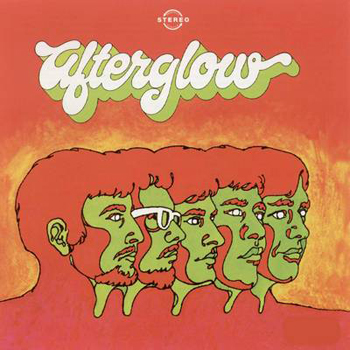
Len Liechti : Incidentally, for Mann virgins, the budget double CD retrospective World Of Mann: The Very Best Of Manfred Mann and Manfred Mann’s...
Len Liechti : I can’t resist quoting, almost in full, a review of this album from another source, the most excellent Galactic Ramble: A Peregrinat...
Jason : Thanks Len. I always felt the Five Faces of and Mann Made were pretty strong records from the British Invasion… two of the best from that era...
Len Liechti : Mea culpa, I’m one of the millions who’ve ill-served and neglected MMEB over the years. I’m gonna have to go on a voyage of...
This is one of the better albums coming from the Move family tree. It was released in 1970 though it has a clear 1967/1968 sound and is one of the best albums of its kind. Rick Price entered the Move sometime in the late 60s, contributing bass and guitar to “Shazam“, “Looking On” and “Message From The Country.” Mike Sheridan had previously been leader of the Nightriders which were a Birmingham group that specialized in the merseybeat sound and 50s rock n roll.
The Nightriders were sort of a breeding ground for future Move members, most importantly Roy Wood. During Price’s tenure with the Move, he and Sheridan started writing songs together for the above album. Both Sheridan and Price share vocals and writing chores on an album that veers into power pop, psychedelia, sunshine pop and progressive pop. There are horn and string arrangements on this beautiful album that recall some of Paul McCartney’s soft moments on the Beatles’ classic White Album (think “Martha My Dear” or even the Move’s great ”Beautiful Daughter”). Some of the heavier moments like “Sometimes I Wonder,” “Lamp Lighter Man,” and “Lightning Never Strikes” sound like excellent 68/69 era Move outtakes. In fact, “Lighting Never Strikes” was released as a Move single at the tail end of the 60s. Sheridan and Price’s version is just as good though not as trippy, with a splendid backwards guitar solo, slashing acoustic guitars and crashing drums. Other songs such as the string laden pop number ”Davey Has No Dad” or the trippy “Picture Box” have a beautiful child-like, story song whimsy that hints at a Ray Davies influence.
This is an exceptional if little known Move album that will appeal to fans of the Beatles, Kinks and even lovers of soft, sunshine pop sounds.
“Lightning Never Strikes”
CD Reissue | 2007 | Ace | amazon ] Original Vinyl | 1970 | Gemini | ebay ]
Posted by Jason |
Friday, April 17th, 2009 | Comments (0)
I never thought I’d be recommending a Cowsills album here on the Storm but I guess stranger things have happened. II x II is considered the group’s finest album along with 1968’s We Can Fly. This lp was a concious attempt to get away from the Cowsills pop image and create something a bit more original and experimental. I think they succeeded marvelously as II x II is a great folk-rock album that saw the band writing more mature, reflective material.
Unlike a lot of sunshine pop groups, the Cowsills could actually play their own instruments. They did this well, along with writing most of the album’s material. Bill and Bob Cowsill wrote a lion’s share of this material, much of it in a gentle, lilting folk-rock style. Father best exemplifies this new approach being a beautiful folk-rocker with a lite psych mellotron touch – this track floats in the air like the best sun pop gems should. Some of the tracks like Signs and Anything Changes even rock hard in spots, much closer to power-pop in spirit but successful any way you slice it. Highlights are really hard to point out on such a consistent and varied album. Don’t Look Back, an early morning country-rocker with a strong CSNY influence is a real gem in the Cowsills catalog while The Prophecy Of Daniel And John The Divine is more abstract and easily their most advanced album cut – a mini masterpiece of lite psychedelia.
This lp should have proven to the world that there was much more to the Cowsills than great singles like The Rain, The Park & Other Things. The sound is very homespun and where the earlier albums relied heavily on studio technology this one doesn’t. When II x II was released the group was suffering a major commercial downfall. The album should have remedied this and repaired their critical standing amongst the rock world. Sunshine pop fans should not miss this near classic album. II x II has been reissued on cd in its entirety along with earlier album tracks under the title Painting The Day.
The Moon were somewhat of a second tier 60’s rock super group. This group was headed by David Marks and Matthew Moore. Prior to the Moon, Marks had been in the Beach Boys (rhythm guitar) and played on their first four albums. After this stint he fronted Dave and the Marksmen who enjoyed several local hits. Moore had been in the Matthew Moore Plus Four and had previously recorded with Capital and White Whale. The Moon formed right after Marks had disbanded his latest group, the Band Without a Name, who themselves recorded 2 singles for Tower and Sidewalk.
The Moon recorded two albums in 1968 and 1969 for Imperial. At this point the lineup was Matthew Moore (piano, chief songwriter and lead vocals), David Marks (lead guitar), Larry Brown (drums) and Drew Bennett (bass). The above debut, Without Earth is by far the stronger record with more psychedelic arrangements and a greater consistency – though some fans would argue this, favoring the more mature sounding sophomore effort. There’s a clear Magical Mystery Tour feel to this album and the group covers two songs off Colours’ (another obscure American popsike group) debut album. Of the two tracks, Brother Lou’s Love Colony catches the ear most, with its nice little sitar flourishes and Beatles influenced bridge. The remaining 10 tracks are Moore originals, all really good but none sound like they could have reached top 40 radio. The group hit a good hard rock groove on Got To Be On My Way, a tune notable for its liquid distorted guitar. I Should Be Dreaming and Walking Around are spacey psych pop gems whose backward cymbals glitter and flicker while the sitars and vocal echo help convey an authentic acid experience. One of the best tracks off the album, Someday Girl, is a beautiful venture into soft pop with a heavenly melody and even prettier strings. Another similar track, Face, sports a nice pro sound with great fuzz bass and a catchy chorus while Give Me More achieves fragile beauty.
Jon Stebbins chronicled both the Moon and David Marks’ story in “The Lost Beach Boy.” In this book author Jon Stebbins mentions that Give Me More was what he felt to be the group’s most enduring track and a work that defined the Moon’s sound best. This album may not be as distinctive or original as the Smoke but it’s still a mini gem of Beatles inspired rock – even the cover art recalls the psychedelic era Fab Four. Without Earth was recently reissued by Rev-Ola and includes the group’s much inferior followup, The Moon.
After releasing three classic garage blue-eyed soul records, the Rascals felt a need to expand their sound, become a bit more ornate, and take in the influence of psychedelia. In early 1968 they released Once Upon A Dream, a vague concept lp inspired by recent albums Pet Sounds and Sgt. Pepper’s. The concept is a bit unclear to me but I believe each track is supposed to represent a different dream. The group’s vocal arrangements were some of their most ambitious to date and where the previous three albums had been excellent collections of album tracks and singles, Once Upon A Dream hangs together quite well as an album – a finished product if you will.
Once Upon A Dream opens up with a fairly well known track, Easy Rollin’. Easy Rollin’ is one of the mini classics on this album and stands out from previous Rascal outings in that it’s more roots influenced with edgy acoustic guitars, harmonica, and B-3. The production on this song is remarkable: one can hear birds chirping in the background and the band itself seems to have more space and breathing room. Other tracks like the dreamy Silly Girl and zany Rainy Day are psychedelic pop songs that have strings and horns in the mix. These sweet, confectionery treats give way to harder edged psych rockers Please Love Me and It’s Wonderful. Please Love Me harks back to the band’s mid 60s garage soul period but has wonderful flute and swirling fuzz guitar effects. Other great songs are the soul-blues of Singin’ The Blues Too Long which has a clear Ray Charles influence, and the great, overlooked blue-eyed soul classic, My World. My World is notable for including female backup singers as well as the Rascals’ own excellent vocal arrangement.
The Rascals would release other good albums after Once Upon A Dream but few pop records from the time are as instantly memorable and sophisticated as this. At the time, the album’s production and sound were considered a triumph. This is a true classic and should be part of any serious rock n roll collection. There are a few cd reissues of Once Upon A Dream currently available while the original Atlantic lp is fairly easy to find.
“My World”
CD Reissue | 2007 | Collector’s Choice | buy from amazon ] Original Vinyl | 1968 | Atlantic | search ebay ]
Posted by Jason |
Monday, June 23rd, 2008 | Comments (2)
One of their very best, the Turtles Present the Battle of the Bands was released in 1968 off the White Whale label. The concept is pretty clear for once, with the Turtles presenting a different band on each track (greasers, a country band, surf rock group, indian tribe, psychedelicists, and so forth). This makes for an eclectic listening experience for sure but somehow the band makes the album gel together quite well.
Battle of the Bands is the kind of record that would have been too eccentric for top 40 fans but not underground enough for diehard freaks. Perhaps this is why Battle of the Bands never found the audience it deserved. It’s a confusing, jarring album at first listen but eventually the band and their songs worm their way into your head like some strange, fatal disease. Elenore and You Showed Me (written by Gene Clark and Jim McGuinn) were big top 10 hits but very worthy in their own right, coloured by a sarcastic sense of humor and gorgeous harmonies. If anything, these tracks prove the Turtles had a genuine gift of melody and a knack for creating 60s commercial pop gold. Other tracks like the semi fuzz guitar instrumental Buzzsaw, the Beach Boys parody Surfer Dan, and the wild, banjo-fuelled Chicken Little Was Right are over the top quirky rockers that are muscially entertaining and overlooked highlights. Food reminds us of the Beach Boys’ Vegetables, a wacky, tuneful psychedelic track with a few primitive snyth stabs and lyrics that recite a brownie recipe. The album closes with an undisputed sunshine folk-pop classic, Earth Anthem, which stands out for its pretty horn arrangement, heavenly harmonies, and sparse accoustic guitars. Earth Anthem, also notable for its ecology theme, was supposedly recorded at 3:00 A.M. by candlelight, to capture the exact mood the Turtles wanted.
Battle of the Bands was a signpost to Flo & Eddie, and is an album where the band let loose creatively and showcased their unique brand of humor. It had all the ingredients that made the Turtles so great: lush melodies, flawless harmonies and fun, pop friendly sounds. The Turtles are one of rock’s most severely underrated groups and anyone doubting this should really consider outstanding early tracks like Grim Reaper of Love, She’ll Come Back, Wanderin’ Kind, Outside Chance, and She’s My Girl – all lost classics. Most of their catalog was reissued by Sundazed back in the early 90’s but has remained out of print for years. Original vinyl lp’s of Battle of the Bands are easy to score but a cd copy will cost you $50+.
Pete Dello was the original leader of the Honeybus, a short-lived but wonderful English baroque-pop group who only managed to release one album in 1970 (finally reissued in 2008). For all the gems available on compilations like Honeybus At Their Best and She Flies Like A Bird: The Anthology, fans of their brand of summery, rootsy pop couldn’t be truly satisfied without an ear on Dello’s fine solo efforts.
Comparisons to the Beatles are somewhat unavoidable, from the next-level songwriting to the double-tracked voice, chamber orchestra production, but assertions of cheap imitation are unacceptable. Dello’s album is a pretty mix, most songs led with a clean acoustic guitar or piano, flavoring the sound with modest string and brass sections. This is where the record gets its baroque tag, but at times the music, like Honeybus, approaches a country-folk-rock sound. Tracks like I’m A Gambler illustrate that perfect mix of rural rock and sunshine pop, blessed with some especially tasteful percussion. The trick to the record’s charm may be the Nilsson inspired vocal treatments, either Dello’s unassuming lead or the lilting vocal turns and harmony parts.
I wouldn’t call it a perfect record, but it gets pretty close and grows to be very solid. Pete scored with his first Honeybus single, I Can’t Let Maggie Go, and gets a chance at a full showcase with Into Your Ears. Only a couple tracks push the British camp too much for my ears, so take note if you’re fond of skipping sillier tracks. If you’re looking for gems, you’ll be right on target.
The Zombies disbanded before their classic Time Of The Season smashed onto radio airwaves, and lead singer Colin Blunstone took to a desk job.
One year later, he grew tired of insurance or whatever it was and got back in the studio. Armed with fellow Zombs Chris White and Rod Argent as co-writers and producers, Colin managed to record what I consider the most precious record in my collection. One Year is a very, very special record to me, so much that it’s actually hard to even mention here.
Three tracks feature backing by the band Argent, and have a lite rock feel, but the rest feature Colin’s silken voice over a tightly arranged and dynamic chamber orchestra. She Loves The Way They Love Her kicks it off with the album’s full band sound. It takes some getting used to as it’s not quite Zombies and perhaps a little too produced, but believe me, this one will get you in the long run with its amazing melody and Colin’s excellent vocal work. The other rock band songs include Caroline Goodbye and Mary Won’t You Warm My Bed, both excellent, upbeat tunes. It’s the orchestra numbers that will get you on this record though. Songs like I Can’t Live Without You, Her Song, and Let Me Come Closer To You will simply murder you.
If you are in the market for records that grow on you more and more each time you listen, this was made for you. I wasn’t sure what to think about One Year when I finally tracked it down (luckily, it’s easily available these days) but after a few years with it, it is definitely one of my favorites, certainly in the top 20: a Sunday morning staple to last my life.
The Kensington Market were a Toronto band that recorded two albums in the late 60s off the Warner Brothers label. Their first album, Avenue Road appeared in 1968 and was greeted with great acclaim. Avenue Road was a modest effort that was noteworthy for a few reasons, it featured decent pop instincts and solid songwriting. In 1969 the band released their final lp titled Aardvark. After the release of this disc the band broke up a few months later, leaving behind a much stronger lp than their debut.
Aardvark is a weird and wonderful mini masterpiece in which much of the Kensington Market’s reputation rests. This time out there were no silly jugband tracks and many of the album’s ideas are fully formed and well thought out. Some of the songs, like the beautifully trippy Cartoon and the ahead-of-it’s-time Help, use primitive synthesizer in all the right ways. Help sounds like a lost Flaming Lips track with its open arrangement and blissed out guitar playing. Side I Am would have had radio potential had it not been for the experimental Smile-era Beach Boys intro. It’s a stunning pop song with Penny Lane horns, fine vocals and that special, inspiring 60s magic. Other tracks like Think About The Times and If It Is Love have more of a meloncholy air but are equally excellent and reveal a more pessimistic side of the band. The experimental Americana of Half Closed Eyes is another standout composition that’s superb in an early morning folk-strum Dylan way with unusual synthesizer flourishes.
Aardvark requires a few close listens to sink in but it really is a great Beatles influenced pop album by an underrated band. This vital piece of Canadian rock n roll will be reissued on cd for the first time by Pacemaker (February/March 2008).
“Half Closed Eyes”
CD Reissue | 2008 | Pacemaker | buy @ EMI ] Original Vinyl | Warner Bros | search @ ebay ]
Posted by Jason |
Tuesday, April 15th, 2008 | Comments (1)
Here’s some more light fare for all the stoned cold rawkers. Sagittarius is the project (and zodiac sign) of one Gary Usher, collaborator and friend to Brian Wilson and producer of Notorious Byrds, and the ambitious Curt Boettcher, another Beach Boys coconspirator and genius behind the legendary Begin album by The Millennium.
Basically, they are companion albums, released in the same month in 1968, where most recommend starting with Begin and expanding into Present Tense. Some will find this album a bit twee for their tastes, and it is very hard to take seriously on first listen. But a little effort in putting it on, and it won’t take long before the album reveals itself to you. I find Present Tense to be almost a little better put-together than Begin, believe or not. Realize though, that you’re not going to win points pumping this album full blast from your bulletproof Trailblazer, that maybe this is an album for headphones on the train, or a light snowy day.
Typically I would balk at posting a track entitled Song To The Magic Frog; I have to though as it well represents the album. The instruments are eq’d with fairy dust it seems, and nice orchestral touches. “Will you ever, will you ever know” sounds to me like a classic Curt Boettcher melody, and though this is a Gary Usher project, Curt’s prevailing influence is unmistakable. The vocals fancifully soar on Another Time and it’s near the top, but I promise you that it is worth growing with Present Tense and all of its lovely gems.
It’s only a matter of time before some hot young director includes some of this Curt Boettcher madness in a popular film and all this soft California sike blows up. Included here from the bonus selections is the single version of My World Fell Down, with the preserved musique concrete bridge that Clive Davis urged removed from the album version:
It’s great to see an album like Miss Butters finally getting the reissue treatment it deserves. The Family Tree was the product of the genius of Bob Segarini, and their only album is a fantastic and interesting conceptual piece with tunes as memorable as any Broadway musical (only really cool).
This record is a must for any Nilsson fan, not alone for some of the similar feels, it was recorded at the same studio as Aerial Ballet, using the same arranger for orchestra parts, same producer, and Harry even wrote a track. A Nilsson album in spirit, but unlike anything he was capable of creating. The Miss Butters recording is superb in its production, the equal of any Beatles record, and soars with string arrangement, backing vocal, and complex song structure.
Previously, Miss Butters was presented in an unapproved stereo mix on vinyl. The CD reissue has remastered audio from the master tapes presented in original mono (and really, really nice sounding). This is a masterful reissue from Revola for a record that truly deserves it. Bravo.
Let’s pull out an old favorite. Actually, I didn’t grow up with this record, like so many lucky few. I can’t say whether I would appreciate it more or less having discovered it in my 20th year or my 10th. Regardless, Nilsson’s kid pop masterpiece is a delight to hear on first discovery or nostalgic re-listening.
Piano and bongos open up a soft groove before Nilsson begins to unleash the vox. Everything’s Got Em is a wonderful and catchy opener. Each track is bookended with Harry’s comforting narration, complete with water sips and page turns. The story is like a fable, about Oblio, the only boy in town without a point on his head. After multiple listens (a must have record for road trips) you may catch yourself singing the narration as much as the songs. “The thing is you see what you want to see and you hear what you want to hear. Dig?”
“After the incident with the bottomless pit…” The orchestration is perfect on this record, with mellow piano, clavinet, mandolin, pizzicato strings, restrained percussion; every rhythm on this record seems to interlock in the most satisfying way. Nilsson created a pop sound with a hint of jazz on this record that you’ll find nowhere else. And tracks like Think About Your Troubles, Are You Sleeping, and Me And My Arrow that you will never forget.
There was a cartoon movie version of The Point (DVD), with Ringo Starr’s voice, but I find it to be a major let-down after hearing the album. I suppose you have to see the movie first to enjoy it. I’ve always dreamed of a redone animated film of The Point, using something like the knitted style shown above, as a visual accompaniment to the album. It would have to be quite a work of art, however, to approach the genius of the record on it’s own.