Posts Tagged ‘ 1970 ’

Emitt Rhodes (self-titled)

Emmit Rhodes

After disbanding his 60s pop group, the Merry Go Round (also recommended!), Emmit Rhodes released this wonderful debut in 1970. Emitt, along with The BBoys, was raised in Hawthorne, California and by the age of 20 had amassed an unusual degree of musical talent. This entire album is composed, performed, and sung by Emitt Rhodes.

This album is different than most lost gems, however, in that there seems to be no good explanation for why it should have remained lost in the first place. The songs are so good, and the recording is ingenious, and incredibly catchy. The closest I get to the problem, is that it sounds too much like The Beatles. In fact, the first time I got this record, I found it hard to get into because it sounded so close to Paul McCartney. It takes the bite out, know what I mean? This doesn’t remain a problem for long, though, as Emitt’s work surpasses that of Sir Paul’s in terms of good to bad ratio. You will soon be bopping along, wishing that Paul had been as focused as Emmy here.

Another classic case of mismanagement later and Emmy’s 4 solo albums would be brushed under the table, waiting for us to scoop it all up. Even after having the song Lullaby featured in Wes Anderson’s Royal Tenenbaums, Emmy’s work remains inexplicably unavailable. I have a feeling a good comp will show up again soon. Daisy Fresh From Hawthorne was a great CD because it held the first album intact and followed with a smattering of pieces from his later albums.

Each song on this self-titled debut is a perfect little gem. You’ve got to track this down somehow. Never pass it up in the bins!

Audio clip: Adobe Flash Player (version 9 or above) is required to play this audio clip. Download the latest version here. You also need to have JavaScript enabled in your browser.

“Somebody Made For Me”

[ Try to Buy From Amazon | Search eBay ]

Barclay James Harvest “Their First Album”

Barclay James Harvest

Barclay James Harvest were one of England’s most unappreciated, hardluck underground bands throughout the 60′s and 70′s. They released a handful a good albums and came very close to major stardom.

Often labeled the “poor man’s Moody Blues,” Barclay James Harvest began their career in or around 1967. In 1968, they released their superb debut single, Early Morning. Early Morning was a confident, mellotron drenched psychedelic ballad that should have gained them notoriety but failed to do so (sounding similar to a really good cut on the Zombie’s Odessey and Oracle). Another good prog-psych single followed but did little to enhance their reputation.

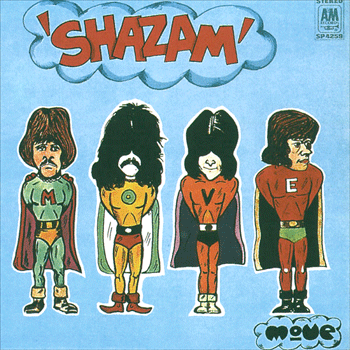
In 1970, their outstanding debut was released in a gorgeous stained-glass illustrated sleeve. Barclay James Harvest (self-titled) was absolutely dynamite, opening up with Taking Some Time On. This song has some seriously vicious, punky psychedelic guitar riffs and hard hitting drums. It’s a pummeling, devastating rock song and a great way to open up this debut, displaying a mature band with wildly inventive ideas. The next song, Mother Dear is a beautiful acoustic composition augmented with strings that is almost a response to the Move’s classic Beautiful Daughter (from Shazaam). Another highlight is The Sun Will Never Shine, a great piece of dramatic progressive psychedelia highlighted by great use of mellotron. The album closes with the 12 minute Dark Now My Sky, which is a sterling example of early progressive rock.

There are no false steps on Barclay James Harvest and this great record never fails to challenge and reward its listeners.

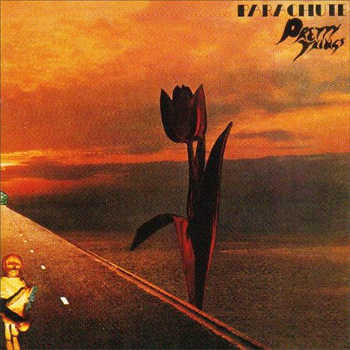
The whole album is absolutely wonderful, finding some kind of middle ground between the Move, psychedelic era Pretty Things and late 60′s Procol Harum. A genuinely fantastic album that is not to be missed, pitched half way between the psych and prog eras.

mp3: Taking Some Time On

[ Buy from Amazon ]

The Wackers “Hot Wacks”

Hot Wacks

Hot Wacks is unquestionably the Wackers best album. Although at times a bit derivative of Abbey Road era Beatles (there’s even a side 2 suite), Hot Wacks is really a lost power pop gem.

In 1971, the Wackers released a strong debut, lushly produced by Gary Usher. While Usher was no doubt a great producer, some may find his production on Hot Wacks a little too slick. The songs and performances save the day though, and show the band maturing at a rapid rate. Bob Segarini, one of the band’s founders, had been in Family Tree and Roxy prior to forming the Wackers. He’s still on the scene today making albums, and if push comes to shove, I’d say that his other two masterpieces are Miss Butters by Family Tree (1968) and Gotta Have Pop which is a solo effort from the late 1970′s.

With Hot Wacks, Segarini and the Wackers’ Beatles obsession reached an apex. On vinyl, the side two suite is very good with some superb harmonies and tight songcraft. Anyone who enjoyed Shake Some Action or Now era Flamin’ Groovies will love this album. The early 70′s psych pop (distorted vocals) of Find Your Own Way and the catchy, sensitive accoustic rocker Time Will Carry On are definite highlights of this medley. Side 1 has a power pop masterpiece in We Can Be. It’s everything you would hope from an underground band like this, a great epic guitar riff and Segarini’s wonderfully gritty, soulful vocals. Even the John Lennon self-analyzing classic Oh My Love is a killer cover, performed with care and panache.

Anyone interested in power pop or Beatles-influenced bands should pick this album up and delve a little deeper into the career of Bob Segarini. A critical assessment of this lost figure is long overdue.

Audio clip: Adobe Flash Player (version 9 or above) is required to play this audio clip. Download the latest version here. You also need to have JavaScript enabled in your browser.

mp3: Oh My Love

[ Buy from Amazon | iTunes ]

Montage (self-titled)

Montage

Michael Brown, though not credited, is the man behind this strange, beautiful album. His work with The Left Banke will go unmentioned for this review, as we will certainly revisit it later. But if you don’t know the Left Banke, think The Zombies gone classical, replacing the Fender Rhodes with a harpsichord.

And if you don’t know Montage, think The Left Banke gone Zombies, though a year or three later, replacing the harpsichord with a bass-driven rhythm section and confident grand piano. Though we have all the chamber elements in place; each song is adequately ornamented with winds, strings and brass when needed, though never when not. What differs from the Banke is a seemingly more progressive sound, certainly a step beyond their great first accomplishments, but one that could go no further.

These songs will surprise you: the haunting She’s Alone, the unbelievable “off-note” that tunes you in to the message of Men Are Building Sand, a Left Banke leftover actually, along with Desiree, a major highlight on this disc, and even better than its original counterpart.

Best of all, The Song is Love, a lite pop master stroke: it’s awesome.

Audio clip: Adobe Flash Player (version 9 or above) is required to play this audio clip. Download the latest version here. You also need to have JavaScript enabled in your browser.

“The Song Is Love”

[ CD / Bonus Tracks / Sundazed ]

****************************************************************

Audio clip: Adobe Flash Player (version 9 or above) is required to play this audio clip. Download the latest version here. You also need to have JavaScript enabled in your browser.

The Left Banke “Desiree”

Audio clip: Adobe Flash Player (version 9 or above) is required to play this audio clip. Download the latest version here. You also need to have JavaScript enabled in your browser.

Montage “Desiree”

John Cale “Vintage Violence”

Vintage Violence

I was listening to a Paul McCartney album the other day, thinking about how when you listen to his solo work, you can then go back and hear just what his contributions were to the Beatles. More likely, you don’t even have to go back, if the Beatles albums are as ingrained into your head as they should be. We get that same opportunity with John Cale and the Velvet Underground, listening to Cale’s brilliant Vintage Violence.

Granted, John Davies Cale left the VU after finishing their second album, but you can tell they missed out on a good thing. This record, unlike the surprising cover would imply, is a perfect pop gem. You might think you’d be getting into a full LP’s worth of Sister Ray type viola droning and electric mayhem, but Cale proves he’s got mad pop song skills to match his solid, driving piano stomping.

No doubt some of these songs should have been hits. That’s what we’re here for though; I’ve got ten bucks that says a song from this album ends up in the next Wes Anderson film (editors note: fail), and if I had to pick one I’d probably go with Amsterdam, certainly a competitor to The Zombs’ The Way I Feel Inside.

If you are into Brian Eno this is going to be very essential for you. John Cale would go on to create more wonderful music and produce some seriously classic albums, so get started here.

Audio clip: Adobe Flash Player (version 9 or above) is required to play this audio clip. Download the latest version here. You also need to have JavaScript enabled in your browser.

“Big White Cloud”

Available At Amazon