Archive for the ‘ Country Rock ’ Category

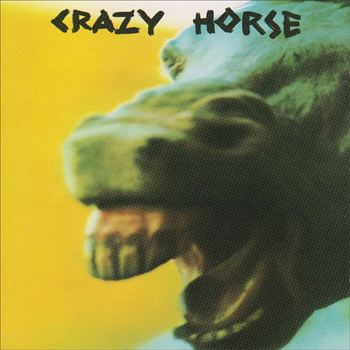
Crazy Horse “Crazy Horse”

Crazy Horse

Crazy Horse was formed by the excellent songwriter Danny Whitten, who originally released an album while known as The Rockets, considered essential for collectors. Nils Lofgren, virtuoso guitarist, and Jack Nitzsche, Spector associate and renowned producer, joined when Neil Young recruited the band to back him on his 2nd solo album, and they were renamed Crazy Horse. Their debut is an excellent hard country rock LP that would prove the capability of the band apart from Neil Young’s lead vocal and songwriting.

This record packs a most satisfying punch. There are some bruisers on here in “Gone Dead Train” and the foot-stompin’ “Beggars Day” with its phaser/flanger effect penetrating the mix. Parts sound inspired by Young and “Dance, Dance, Dance,” under his pen, is a kickin country rock number with an old-timey feel. Arguably, the best tunes come from Whitten, like the hypnotic “Look At All The Things,” a soft and beautiful ballad, “I Don’t Want To Talk About It,” and of course the rollicking “Downtown” which would resurface on Neil’s Tonight’s The Night.

Sadly, Danny Whitten’s heroin use would lead to him being excused from Crazy Horse and he overdosed in late 1972. A major loss considering his unrealized talents, best heard on this album, and his death would partly influence the Ditch Trilogy.

Forget the whole story though. Forget Neil Young. Just get yourself some Crazy Horse and drive.

Audio clip: Adobe Flash Player (version 9 or above) is required to play this audio clip. Download the latest version here. You also need to have JavaScript enabled in your browser.

“Look At All The Things”

[ Buy from Amazon | Search eBay ]

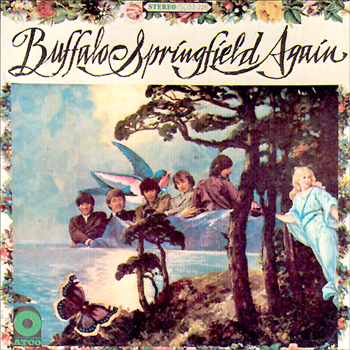
Buffalo Springfield “Again”

Again

Buffalo Springfield recorded three albums from 1966-1968 and the first two are essentials. Again is their 2nd and affords some improvement over their near perfect debut. This is the group that launched the careers of Stephen Stills and Neil Young; Buffalo Springfield is a must for fans of Manassas, the Byrds, CS&N, Neil Young. At times, it’s almost as if they were all the same band.

Songs like Stills’ “Everydays” offer a mellow jazz feel with feedback guitar. Neil’s “Mr. Soul” is like the Byrds and the Stones with Neil Young on vocals, a great song as well as his orchestral “Expecting To Fly.” “Bluebird” sounds like a CS&N preview with its hard riffin’ acoustic guitar lead, solidified by its postscript: an acoustic ‘take two’ on the track, genius. “Hung Upside Down” is a great track that caught the attention of Colin Blunstone (check out his rendition here). “Rock and Roll Woman” is total Manassas preview material and Neil closes it up with the lovely “Broken Arrow,” maybe the nicest track (and certainly most interesting, with its sound collages) on here. There are different directions on Again, but its all still cohesive enough to contain that magic like only a classic 1967 record could.

What really drives this record for me is the rhythm section. That plucky electric bass and the punchy airless drums, it’s just the sound you want from the rhythm section on any rock record. If all you know of Buffalo Springfield is “For What It’s Worth,” get your shit together and find this record. (Don’t settle for Retrospective!)

Audio clip: Adobe Flash Player (version 9 or above) is required to play this audio clip. Download the latest version here. You also need to have JavaScript enabled in your browser.

“Bluebird”

[ only $5 or 10 at Amazon ]

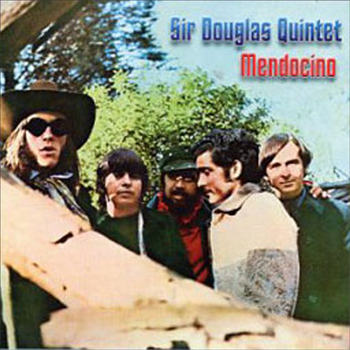
Sir Douglas Quintet “Mendocino”

Mendocino

You could never judge The Sir Douglas Quintet by their name. It was picked out by a manager that wanted to give the boys an English vibe, pretty common practice in those days considering the influence of The Beatles. Thing is, there’s no name that could ever define the eclectic hodge-podge sound the Sir Douglas Quintet consistently rocked for a good 5 or 6 years after 1969. Well, except maybe ‘Doug Sahm.’

Mendocino is not only a great introduction to SDQ and Doug Sahm’s music, but its own style of music all together. Texas music was a result of a great cross section of western musical styles, including tex-mex, cajun, polka, country, rhythm and blues, rock, and the San Fransisco sound. Doug Sahm was probably the first musician who was legitimately steeped in all of this and couldn’t control himself from playing it all at once.

As for the tunes on Mendocino, there are nary a miss, but not exactly a first-time winner. I mean this album will have to grow on you before you can really enjoy it. Once you get the hang of the sound you’ll be ready for the whole Little Doug discog. Crossroads is an easy one to get into fast, as is the SDQ’s biggest hit: She’s About A Mover, featuring the classic Vox Continental organ lead from Augie Meyers. Lawd, I’m Just A Country Boy is a great illustration of a Texan’s view of the late 60′s scene in SF (and a microcosm of the album in general). I’ve got a big soft spot for some of the more subtle numbers as well, like I Don’t Want and I Wanna Be Your Mama. The seven bonus tracks included on the CD reissue are all keepers too; check out Sunday Sunny Mill Valley Groove Day.

All in all, this is an exceptionally strong album, and one you won’t regret picking up, after you give yourself some time with it. A real good grower.

Audio clip: Adobe Flash Player (version 9 or above) is required to play this audio clip. Download the latest version here. You also need to have JavaScript enabled in your browser.

“Lawd, I’m Just A Country Boy In This Great Big Freaky City”

[ Buy from Amazon | search eBay ]

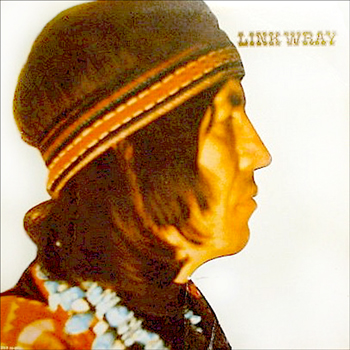
Link Wray (self-titled)

Link Wray

This is a great record with which to understand the appeal of raw lo-fidelity recordings. Modern bands like Whiskeytown and early Wilco wrote music that could equal the work of alt-country masters of the past, but their tunes are hampered by modern recording technology, sounding so pretty and sterile that there is no authenticity or character. When you learn to love the toneless piano, acoustic guitar riffin, unaffected treblelectric guitar, and clanky assortment of found percussion objects driving this record, you might wonder why audiophiles ever bothered to enhance recording technology beyond 1971.

Link Wray was a guitar sensation in the late 50s and 60s who had instrumental hits in songs like Rumble and Jack the Ripper. He has the truly awesome distinction of being called the first guitar player to use overdrive and power chords! It wasn’t until 1971, however, during Link’s comeback that his masterpiece works emerged, in a style and sound akin to that of the Stones and V. Morrison, but a roots rock swamp muddy and smokin’. These albums were recorded in a converted chicken shack on Link’s Maryland farm using makeshift equipment.

Link Wray self-titled is an album that was hard to find in recent years. I had to get it on an OOP box set called Guitar Preacher which was a good, if incomplete, collection of Link’s comeback stuff. Now we are blessed with Wray’s Three Track Shack, a 2005 collection of these three excellent albums from 1971-1974. Beans & Fatback is every bit the equal of the self-titled record, and Mordicai Jones features singer Bobby Howard taking a Little Feat white-soul approach on lead vocals for the album. However, I do prefer Link’s tattered and gritty voice on the other records.

Songs on these records range from fuzz git rockers to country-grass interludes, but the best of them just drive with that laid back Stones feel that gets everyone to nod in time. This compilation is a one of a kind treat that should appeal to all roots rock and music lovers.

Audio clip: Adobe Flash Player (version 9 or above) is required to play this audio clip. Download the latest version here. You also need to have JavaScript enabled in your browser.

“Fire And Brimstone”

Audio clip: Adobe Flash Player (version 9 or above) is required to play this audio clip. Download the latest version here. You also need to have JavaScript enabled in your browser.

“From Tulsa To North Carolina”

[ Buy from Amazon | eBay search ]

The Louvin Brothers “Satan is Real”

Satan Is Real

Here’s an essential country gospel record for any collection. Satan is Real is most (in)famous for its cover, which is a photograph of a real set designed and ignited by the Louvin’s themselves, highlighted by the magnificent 12 foot plywood Satan depiction, and noted in the liners to have nearly killed the fellas when the flames got out of hand. This album should be every bit as well known, however, for its quality of sound.

Regardless of your interest in religion, there is no denying the beauty and intensity in music devoted to the Higher Power. And as the Byrds taught us, there can be a campy joy, perhaps tongue-in-cheek, in singing together about “The Christian Life” and “Satan’s Jeweled Crown.” However, Charlie and Ira Louvin did NOT sing these songs with even the slightest intention of mockery; you can hear it in their passionate, strikingly harmonious singing. “You can hear him in songs that give praise to idols and sinful things of this world!

Aside from the shock of hearing the finest harmonized voices from the history of country music singing and preaching on the woes of doomed sinners and the realness of Satan, there is a perfectly restrained country combo backing, with church organ, snare drum, upright bass and excellently twanged electric guitar. Each song is well written and completely memorable. It’s a perfect, yet challenging and rewarding, album.

Audio clip: Adobe Flash Player (version 9 or above) is required to play this audio clip. Download the latest version here. You also need to have JavaScript enabled in your browser.

“Satan Is Real”

[ $5 used @ amazon! | ebay is Real ]

Relatively Clean Rivers (self-titled)

Relatively Clean Rivers

This album comes out of the mind of Phil Pearlman. Pearlman is a veteran of the American 60′s rock scene, being the brains behind such epic psych albums Beat of the Earth and the great Electronic Hole. Relatively Clean Rivers’ only album was released in 1975/76 though it sounds straight out of 1969. This album is extremely rare and has proven to be quite a controversial privately financed release.

Some feel this album is the second coming, with strong apocalyptic acid visions and wonderful musicianship. Others feel that it’s a solid rural rock record with strands of late period psychedelia. It’s important to note that Relatively Clean Rivers was name checked as an influence in a recent interview (via Record Collector magazine) with a Wilco band member concerning their latest album release. This Wilco band member called the record a 60′s guitar album that is “economic.” Regardless, RCR may not be the second coming but it’s still a great album from a period in rock (1974-75) that was thought to be void of such hidden country psych gems.

It’s really a quiet, flowing rural record that has many unsettling, strange moments. At first listen Hello Sunshine immediately stands out amongst the crowd. This song is pretty great, sounding like a stoned underground version of Crosby, Stills, Nash and Young. Everything comes off very natural and the music never sounds forced or dishonest. Much of the record is predominately acoustic, though Journey Through The Valley has some strong electric guitar acid leads. Other tunes like the effects laden Babylon are very spacey and almost veer towards progressive rock. The album closes with the reflective A Thousand Years. It’s another strong composition with some eastern influenced acoustic guitar playing, lyrics with bizarre religious overtones and backward cymbals. Relatively Clean Rivers is not bound to be everyone’s cup of tea, though fans of rural rock should investigate this great private press release.

Audio clip: Adobe Flash Player (version 9 or above) is required to play this audio clip. Download the latest version here. You also need to have JavaScript enabled in your browser.

“Hello Sunshine”

NOTE: Please avoid purchasing this album from the Radioactive label. Radioactive and related label, Fallout are pirate operations, meaning they do not pay the original artists or copyright holders when they sell bootleg vinyl rips on CD. Read more about it at NothingExceptional.com.

Hearts and Flowers “Of Horses, Kids, and Forgotten Women”

Of Horses, Kids, and Forgotten Women

Hearts and Flowers released two good LA country folk-rock records in the late 60′s and left behind a plethora of outtakes. Of Horses, Kids and Forgotten Women from 1968 is arguably their crowning achievement. Larry Murray, Dave Dawson and Rick Cunha had made up the first lineup of Hearts and Flowers, all coming from an early to mid 60′s folk mindset. In the summer of 67 they released Now Is The Time For…. to critical acclaim. By the time of their second album Bernie Leadon of Eagles, Flying Burrito Brothers, and Dillard & Clark fame had replaced Rick Cunha.

Of Horses, Kids and Forgotten Women has a few strong covers in Highway In The Wind and She Sang Hymns Out Of Tune. The harmonies were radiant and the band preferred acoustic instruments over electric. Some of the compositions have attractive string, harpischord and horn arrangements. But it is the originals that really grab the ear.

Second Hand Sundown Queen, When I Was A Cowboy, Legend Of Ol’Tenbrookes and the beautiful Extra Extra medley are classy, early country rock songs that have definitely stood the test of time well. The sound here is very close to the quieter moments on Buffalo Springfield’s Last Time Around or even the Beau Brummels on their fabulous Triangle album.

Larry Murray’s Ode To A Tin Angel is the album’s undisputed classic. Tin Angel is a multilayered psychedelic epic that never forsakes Hearts and Flowers love for Americana.

It’s a superb, challenging piece of music that would not be out of place on Millennium’s Begin album. Hearts and Flowers never received their due because the music they created was ahead of it’s time.

Audio clip: Adobe Flash Player (version 9 or above) is required to play this audio clip. Download the latest version here. You also need to have JavaScript enabled in your browser.

“Ode To A Tin Angel”

[Complete Hearts and Flowers CD | Search eBay ]

The Everly Brothers “Roots”

Roots

Back in 1968, if you were an Everly fan, you probably would have thought the Brothers had ‘sold out’ when Roots was released. Though they recorded plenty a pop wonder, this return to the music of their childhood and new sway into contemporary sounds at once was a bold move. Today, it serves as an easy introduction for fans less tuned to the early 60′s Ev’s, and it will always stand as one of the most important country rock records ever.

It opens with a delightful introduction from Ma and Pa Everly, explaining just how young their talented youngsters really are: “and we gonna play and sing you some songs, neighbors… family style, also country style.” By the time Mama Tried jolts in you’ll understand this record. The playing is clean, smooth, and country. There are hints of experimentation and collage throughout the record and the arrangements both pay tribute and give new life to these songs.

Fair tribute to the similar sounding late Beau Brummels is paid, the Everlys covering Ron Elliot’s Turn Around from Bradley’s Barn and the relaxed Ventura Boulevard. Also of note is that Ron Elliott was in the studio, overseeing production of Roots, which also accounts for the similarity in sound. On Roots, the Everly Brothers managed to put an entirely new sound on Shady Grove and T For Texas while at the same time doing their damndest to establish modern songwriters with the new country-rock standards they had written. As always, their harmonies are great.

There’s a non-country gem on this record that stands out a bit, it’s an early Randy Newman tune entitled Illinois that anyone lucky enough to be living in that fine City of Chicago needs to have on hand. (Looks like this site has it).

The Everly’s had always been combining country music and pop. With Roots, maybe they didn’t invent country-rock, but they cut their definitive statement on it, and from all the groups who were experimenting with this new sound and style, they were probably the most qualified.

Audio clip: Adobe Flash Player (version 9 or above) is required to play this audio clip. Download the latest version here. You also need to have JavaScript enabled in your browser.

“Turn Around”

[ Buy from Amazon | Search eBay ]

Great Speckled Bird (self-titled)

Great Speckled Bird

The Great Speckled Bird was lead by Ian and Sylvia Tyson. The above album was recorded and released in 1970. The record company pulled the album from store shelves within months, making this album rare and thus sought after. It’s not uncommon for a copy of the Great Speckled Bird to exchange hands for hundreds of dollars, if not more!

The album itself was a great mixture of early country-rock and folk. At the time it was a bold move for the Tysons to break free from their folk straight jackets. The Great Speckled Bird was supposed to signal the beginning of something new for this famous folk-rock duo. The band was very tight from live gigging, containing some good musicians such as the Remains’ N.D. Smart. Amos Garrett (lead guitar) and Buddy Cage (steel guitar) play with an added venom, incorporating different tones and textures to their guitar playing that work just brilliantly.

The concept of the Great Speckled Bird was to change the direction of folk as well as add electricity and rock n roll power to contemporary country music. The songs speak for themselves, just listen to the power in Ian Tyson’s Calgary. Both he and Sylvia are in great voice, adding a compelling and courageous element to this landmark album. Some of the songs such as Love What You’re Doing Child have that funky rural vibe while others (Rio Grande) recall their folk past. Flies in the Bottle is a beautiful country song and one cannot help but think how this album predates the Gram Parsons and Emmylou Harris collaborations. At times this album rocks hard too, as heard on Bloodshot Beholder.

Definitely worth your time, the Great Speckled Bird is the best album this duo has ever released.

Audio clip: Adobe Flash Player (version 9 or above) is required to play this audio clip. Download the latest version here. You also need to have JavaScript enabled in your browser.

“Calgary”

[ Buy from Amazon | Search eBay ]

Michael Nesmith “Magnetic South”

Magnetic South

Michael Nesmith was never really a Monkee. At least, not in the way that most folks imagine the Monkees – as 60s bubblegum phonies in a TV show. The Monkees eventually got with it enough to deserve much more cred than that, but Nez was always ahead of the game.

By 1965, Nezzy was writing and selling hits in LA that were recorded by artists like The Stone Poneys and The Paul Butterfield Blues Band. His only mistake was showing up for an audition advertising their need for “four insane boys.” While there’s no telling if it was a mistake or not, Nezzy grew unhappy with lack of freedom afforded to him on the Monkees’ records. He was a musician and a songwriter in the first place!

In 1970 he paid a mint to end his contract early and got to business. It’s clear he wanted to renew his image, because The First National Band he assembled went on to record this country rock classic which is right on par with the Burritos and Poco. When you spin this you’ll realize why Nezzy got frustrated in the Monkees; his songwriting is incredibly strong.

The tone is almost more country than rock, not to say he turned his back on his pop roots. The pedal steel verges on Hawaiian and the band commits to a laid back but very tight sound. Nezzy doesn’t have that “deep in the heart a” country bass kind of vox, but he gets nice and yodelly-melodic on Joanne (the album’s #21 single) and brings out the high-lonesome on Keys To The Car. Things tend to get a little groovy here and there, but First National always brings it back home! Great licks and a very memorable album.

This is a real-deal country rock record, every bit influential as all the others. If you look for this on CD, you’ll also get the other two First National Band records that followed Magnetic South, both as great as the first.

mp3: Hollywood

[ Buy from Amazon ]